 English
 عربى
عربى Français
 русский
 Español
 中文简体
中文简体In the high-stakes environment of a professional kitchen or the meticulous design of a custom home, the choice of refrigeration isn’t just about cooling—it’s about workflow, space management, and long-term efficiency. The debate between a Counter Refrigerator with Drawer and a traditional Door Unit often boils down to how you interact with your ingredients. While door units have been the industry standard for decades, drawer-style refrigeration is revolutionizing “point-of-use” storage.
1. Ergonomics and Accessibility: The Reach vs. The Pull
The primary advantage of a Counter Refrigerator with Drawer lies in its superior human-centric design. In a fast-paced culinary environment, every second a chef spends looking for an ingredient is a second lost in service. When you pull out a drawer, you are presented with a “bird’s eye view” of the entire contents. Because the drawers pull out fully, there is no need to crouch down, kneel on a hard floor, or move three jars of sauce just to reach the marinated chicken tucked in the back. This makes drawer units the ultimate solution for “line prep”—placing them directly under a griddle or prep station allows a cook to access proteins, garnishes, or prepped pans with a simple, fluid motion that doesn’t break their physical rhythm.
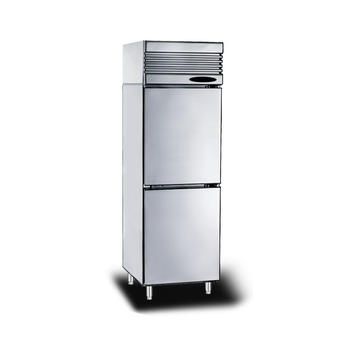
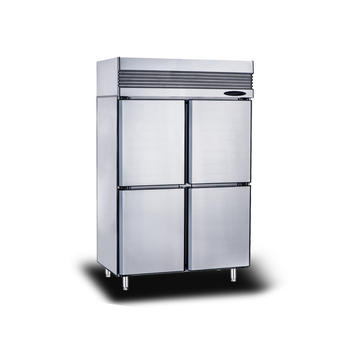
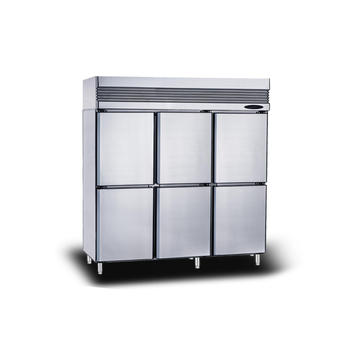
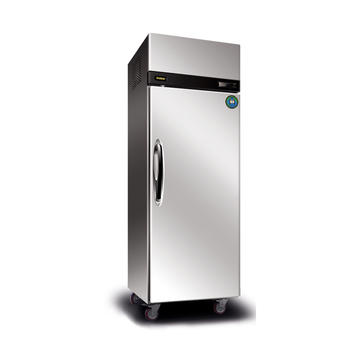
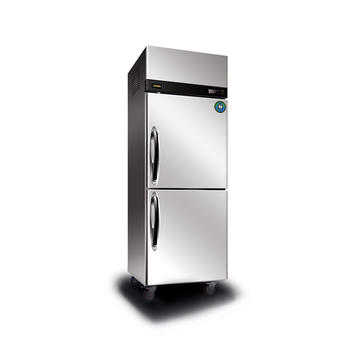
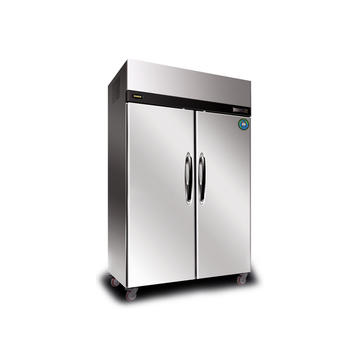
Traditional Door Units, conversely, require a “reach-in” motion. While they offer a wide-open interior, the lower shelves are notoriously difficult to see and organize. Users often find themselves “spelunking” in the dark corners of the unit to find items, which frequently leads to food waste as forgotten ingredients expire in the back. However, door units have a distinct advantage in vertical versatility. Because they lack the fixed horizontal dividers of drawers, they are far superior for storing tall or bulky items. If your primary need is to store gallons of milk, wine bottles, or large stock pots, a door unit with adjustable shelving provides the height that a drawer unit simply cannot accommodate.
2. Space Efficiency and Kitchen Layout
The physical footprint and the “flow” of your kitchen often dictate which model is viable. In modern kitchen design, “clearance” is a critical metric. Traditional door units require a specific “swing radius” to open fully. In a narrow galley kitchen or a crowded bar area behind a counter, an open refrigerator door can completely block a walkway, creating a bottleneck for staff or a safety hazard in a high-traffic zone. If the door is left ajar, it becomes an obstacle that people must navigate around.
The Counter Refrigerator with Drawer solves this by requiring only linear clearance. While you still need space to pull the drawer out, it doesn’t create a swinging barrier that cuts off the rest of the kitchen. Furthermore, most drawer units are engineered as “worktop” or “undercounter” refrigerators. This means the top surface is typically reinforced with heavy-duty stainless steel, allowing it to serve a dual purpose: it can act as a primary cutting station or a sturdy stand for heavy equipment like fryers, salamanders, or griddles. For small-scale operations or food trucks where every square inch is a premium, the ability to combine high-performance refrigeration with a functional workspace is a game-changer for spatial economy.
3. Temperature Stability and Energy Efficiency
From a thermodynamic perspective, the two designs behave very differently. Cold air is denser and heavier than warm air. In a traditional door unit, the moment the vertical door is opened, the cold air essentially “pours out” from the bottom of the unit, and warm room-temperature air rushes in to fill the top. This results in a rapid spike in internal temperature, forcing the compressor to kick into high gear to stabilize the environment every time someone grabs a soda or a lemon. Over a 12-hour shift, these constant temperature fluctuations can put significant strain on the cooling system and increase energy consumption.
A Counter Refrigerator with Drawer benefits from what experts call the “Bucket Effect.” Because the refrigerated space is contained within a pull-out tub, the cold air stays “trapped” inside the drawer even when it is fully extended. There is very little air exchange with the outside environment. This results in remarkably consistent temperature stability, which is critical for preserving the shelf life of highly sensitive, high-value items like raw seafood, aged steaks, or delicate dairy products. For businesses focused on minimizing food spoilage and reducing their carbon footprint through energy-efficient appliances, the drawer unit offers a clear technical edge in thermal retention.
4. Cleaning, Maintenance, and Durability
Longevity and hygiene are the final pieces of the puzzle. Door units are mechanically simpler; they rely on a set of hinges and a magnetic gasket. With fewer moving parts, they are generally easier to maintain over a 10-year lifespan, and replacing a worn-out hinge is a low-cost repair. However, cleaning the deep interior of a reach-in unit can be a back-breaking task, as staff must reach into the very back of the cabinet to sanitize the corners and shelf tracks.
In contrast, a Counter Refrigerator with Drawer utilizes heavy-duty telescopic slides and rollers. In a commercial setting, these tracks can collect flour, grease, or food debris, which may cause the drawer to stick or become misaligned if not cleaned regularly. While modern stainless steel drawer units are built for “heavy-duty” cycles, they do require a more disciplined maintenance schedule to ensure the glides remain smooth. From a hygiene standpoint, however, drawers are often preferred by health inspectors because the entire drawer bin can frequently be lifted out of the slides and run through a high-temperature dishwasher, ensuring a level of sanitation that is nearly impossible to achieve with a fixed-cabinet door unit.
Comparison Summary: Drawer vs. Door Units
| Feature | Counter Refrigerator with Drawer | Traditional Door Unit |
|---|---|---|
| Primary Benefit | Speed of access & ergonomics | Large bulk storage & height |
| Organization | High (Segmented bins/pans) | Moderate (Adjustable shelves) |
| Footprint | Linear pull-out (Best for aisles) | Swing radius (Needs clear arc) |
| Thermal Loss | Minimal (Bucket effect) | High (Air pours out) |
| Cleaning | Easy (Removable tubs) | Hard (Must reach deep inside) |
| Initial Cost | Higher (Complex mechanics) | Lower (Simple construction) |
| Best For | Prep lines, steaks, garnishes | Milk, bulk crates, tall bottles |
FAQ Section
Q1: Can I install a Counter Refrigerator with Drawer under a hot grill?
A: Yes, provided you choose a “Heat Shield” or “Chef Base” model. These are specifically designed with extra insulation on the top surface to prevent the heat from the cooking equipment from affecting the refrigeration efficiency.
Q2: Are drawer units noisier than door units?
A: Not necessarily. The noise level depends on the compressor and fan motor quality. However, you might hear the mechanical “glide” of the slides, which is a sound you don’t get with a silent swinging door.
Q3: Why is the price difference so high between the two?
A: Drawer units require significantly more stainless steel (for the drawer tubs), heavy-duty ball-bearing slides, and complex gasket seals for each individual drawer. This added material and engineering typically result in a 25–40% price premium.
References
- Global Kitchen Tech Review (2025). “The Evolution of Undercounter Cold Storage: A Comparative Study.”
- Smith, L. & Reed, P. (2024). “Thermal Retention and Energy Consumption in Drawer-Style Commercial Refrigeration.” Journal of Food Engineering.
- Restaurant Design Association. “Ergonomic Standards for Professional Prep Stations: Why Workflow Dictates Equipment Choice.”