 English
 عربى
 Français
 русский
 Español
 中文简体
A display freezer has an awkward job. It must hold frozen stock at a genuinely low temperature while keeping that stock visible, easy to reach and appealing enough to sell. Every design decision inside the cabinet, from glass thickness and frame heating to airflow and interior lighting, is a compromise between those two goals.
We have been manufacturing commercial refrigeration equipment since 1987, first in Taiwan and, since 2008, at our own factory in Shengzhou, Zhejiang. The questions buyers bring to us have barely changed in that time: which format suits my space, which specifications actually affect performance, and what keeps a cabinet working well into its fifth year. This guide works through all three.
What a Display Freezer Actually Is
The term gets used loosely, so it helps to be precise. A display freezer is a refrigerated cabinet built to hold frozen goods at roughly -18 °C or colder while keeping them visible and accessible to customers. That separates it from a storage freezer, where visibility hardly matters and the doors are often solid, and from a display chiller, which runs above freezing for drinks, dairy, deli items and produce.
Most cabinets in this category share three defining features:
- Glass doors, usually double glazed, often with heated frames or low-emissivity coatings that keep the outer pane clear.
- Forced-air cooling, so temperature stays even from the top shelf to the bottom instead of stratifying.
- Shelving, lighting and door geometry planned for merchandising rather than for maximum storage volume.
Get one of those wrong and the failure appears quickly: misted glass, warm spots close to the door, or a cabinet that looks right but runs far longer than it should.
The Formats You Will Be Comparing
Upright glass door cabinets
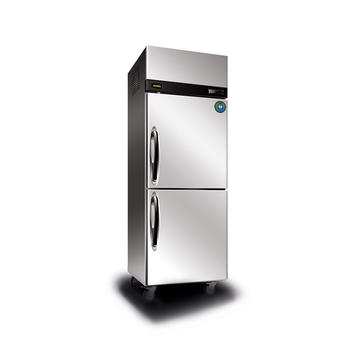
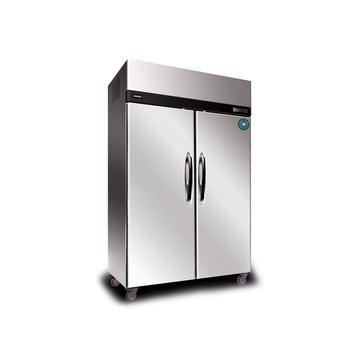
This is the workhorse of retail frozen display. The same steel shell usually comes in one, two or three door versions, and in many cases the same body is offered as either a chiller or a freezer, so a shop can line up matching units at different temperatures. Exteriors are normally colour-coated steel or stainless steel, and the choice is as much about the interior fit-out as about durability: a lighter finish suits bright convenience store schemes, while stainless steel appeals where hygiene and heavy cleaning are part of daily life.
 Single-Door Colorbond Glass Door Display Refrigerator LD-640C/FA 500L upright commercial display refrigerator available in chiller or freezer versions, with heated auto-close glass door and digital temperature control.View Product →
Counter-height and undercounter display cabinets
Lower cabinets sit beneath a counter or form part of a service line. They suit bars, coffee bars, small delis and food preparation areas where floor space is tight and staff need product within arm's reach. Capacity is limited, so they reward disciplined restocking: a counter cabinet that gets loaded once a day performs far better than one that is opened every few minutes during a rush.
Specialty and service formats
Salad counters, beer bar units, GN pan cabinets and wall-mounted refrigerators serve narrower purposes. They are usually working storage rather than customer-facing display, but they belong in the same planning conversation, because a frozen display is only as useful as the cold storage behind it.
Specifications Worth Comparing Line by Line
Two cabinets can look identical on a showroom floor and behave completely differently once they are loaded. These are the points that separate them.
| Specification | Why it matters | What to look for |
|---|---|---|
| Door configuration | More doors mean more display area, but also more heat gain and a longer gasket perimeter | One door for tight footprints; two or three for range and volume; half doors where cold-air spill is a concern |
| Temperature range and control | Frozen goods need around -18 °C or below, and ice cream often prefers -20 to -22 °C | A digital controller with a visible set point and a cabinet rated for the temperature you actually need |
| Defrost method | Frost on the evaporator cuts cooling capacity and lengthens running time | Off-cycle or electric defrost with time or temperature termination, plus a drain that can be cleaned |
| Airflow design | Uneven airflow is the most common cause of warm shelves | A clear return air path, sensible shelf spacing and a load line marked inside the cabinet |
| Anti-condensation on glass | Humidity turns a display door into a fogged window and hides the product | Heated door frames, double or triple glazing, and the option of a low-emissivity coating |
| Interior lighting | Good lighting sells product, but it also adds heat inside the cabinet | Low-heat LED strips positioned so labels and packaging stay readable |
| Exterior material | Finish affects cleaning routine, appearance and budget | Colour-coated steel for lighter schemes; stainless steel where hygiene is the priority |
| Refrigerant and compressor | Both drive efficiency, running noise and service life | Readily available refrigerant, a compressor matched to the cabinet duty, and accessible components |
Matching the Cabinet to the Room and the Product
Start with the space rather than the model number. Measure the run available, then allow for door swing, aisle width and the clearance needed at the back for ventilation. A cabinet pushed tight against a wall will struggle in summer, and no specification sheet can compensate for that.
Next, look at what will go inside. Packaged frozen meals and vegetables tolerate a wide temperature band and steady turnover. Ice cream and frozen desserts are far less forgiving: they need a colder set point, quicker recovery after the door closes, and shelves that are not packed so densely that air cannot circulate. Where doors are opened constantly by customers, a two-door cabinet with a smaller glass area often holds temperature better than a single wide door.
Finally, be honest about turnover. An oversized freezer that is barely half loaded and a small freezer stuffed past its load line both run badly, and for the same underlying reason: the refrigeration system was never given the conditions it was designed for.
 Two-Door Colorbond Glass Door Display Refrigerator Beverage Cooler LD-1260C/FA 1050L commercial beverage cooler or freezer with two heated glass doors, digital control, and high ambient temperature design.View Product →
Problems That Show Up in the First Year
Almost every early complaint we hear traces back to one of a small number of causes:
- Condensation on the outer pane, usually because the shop is humid, the door frame heater is set low, or the door is left ajar.
- Product stacked above the marked load line, which blocks the air return and warms the whole cabinet.
- Cartons or display material pushed against the return air grille at the base of the cabinet.
- Dusty condenser coils, which show up as long running times and slowly rising temperatures.
- High ambient conditions in kitchens or unshaded shopfronts, where a cabinet rated for a milder climate is asked to do too much.
- Worn, hardened or misaligned gaskets that let cold air escape along the whole door edge.
Keeping Performance Steady Over Time
A display freezer is a working machine, and a modest routine keeps it close to its original performance:
- Each day, check the temperature display against your own thermometer and glance at the gaskets for gaps or tears.
- Each week, clean the glass and door frames, and confirm that nothing is stored above the load line.
- Each month, brush or vacuum the condenser coil and check that the cabinet still sits level with clearance at the rear.
- Each quarter, inspect hinges and door closers, clear the defrost drain, and compare the controller reading with a calibrated probe.
- Once a year, arrange a service visit for the refrigeration circuit, electrical connections and door alignment.
Choosing a Manufacturer, Not Just a Model
Display freezers are long-lived assets, so who builds the cabinet matters as much as what the cabinet does on day one. Our company started in Taiwan in 1987 and set up its mainland factory in Shengzhou in 2008, roughly an hour from Ningbo port, which keeps export shipments straightforward for distributors and project buyers. Alongside finished cabinets we produce our own evaporators and condensers, so the heat exchange side of a display freezer is designed by the same team that builds the box around it.
 Three-Door Stainless Steel Glass Door Display Refrigerator RE-1800C/FA 1400L Redbowl commercial refrigerator or freezer with stainless steel construction and joint-in cooling unit for easier maintenance.View Product →
That overlap is useful when a project needs more than a catalogue order. If you would like the background on how the factory is organised, you can read more in our company profile.
Questions Buyers Ask Before Ordering
Chiller or freezer: which do I actually need?
Choose by product, not by habit. Anything held below freezing needs a freezer cabinet; drinks, dairy, deli and fresh produce need a chiller, which runs above 0 °C and costs less to operate. Many of our shells are available in both versions, so a mixed run can be matched visually even when the internal temperatures differ.
How much does door count change running costs?
Every additional door adds glass area, gasket length and heat gain, so a three-door cabinet draws more than a single-door unit of the same build quality. The right answer depends on how much display space you need and how often customers open the doors. Where traffic is heavy, more doors of smaller size are often the better compromise than one large door.
Specification sheets and photographs will get you a shortlist, but the final decision usually comes down to two things: whether the airflow and temperature control suit what you actually sell, and whether the manufacturer can support the cabinet after delivery. If you would like to compare configurations, dimensions and temperature options in one place, you are welcome to download our product catalogue and work through it at your own pace.