 English
 عربى
عربى Français
 русский
 Español
 中文简体
中文简体An upright stainless steel refrigerator is the more practical, budget-friendly choice for most households, while a French door model wins on storage flexibility, aesthetics, and premium features. If you cook frequently, have a larger family, or want a centerpiece appliance for an open-plan kitchen, the French door format has clear advantages. But if you prioritize simplicity, lower cost, and reliable everyday performance, a well-built upright stainless steel refrigerator delivers everything most people actually need. Here's a detailed breakdown of how the two compare across every dimension that matters.
Understanding the Two Formats
What Is an Upright Stainless Steel Refrigerator?
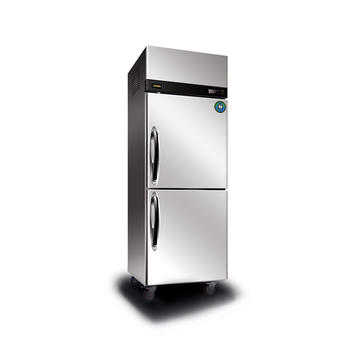
An upright stainless steel refrigerator — also called a top-freezer or bottom-freezer refrigerator depending on freezer placement — features a single door for the refrigerator compartment and a separate door for the freezer. The stainless steel exterior gives it a sleek, modern look that fits most kitchen styles. These units typically range from 18 to 30 cubic feet in capacity and are available from nearly every major appliance brand at a wide range of price points.
What Is a French Door Refrigerator?
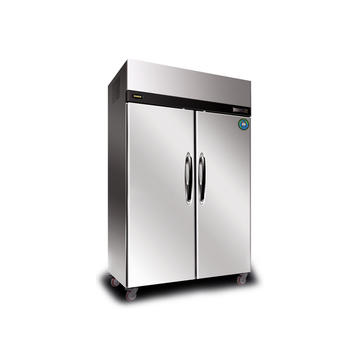
A French door refrigerator features two narrow side-by-side doors that open outward to reveal a wide refrigerator compartment, with a pull-out freezer drawer at the bottom. Most models are 25 to 36 cubic feet, making them among the largest residential refrigerators available. French door models are almost universally finished in stainless steel and are positioned as premium kitchen appliances, often loaded with features like dual ice makers, door-in-door compartments, and smart home connectivity.
Side-by-Side Comparison at a Glance
| Factor | Upright Stainless Steel Refrigerator | French Door Refrigerator |
|---|---|---|
| Average Price Range | $500–$1,500 | $1,200–$4,000+ |
| Typical Capacity | 18–30 cu ft | 25–36 cu ft |
| Door Swing Space Required | Full door width (24–36 in) | Half door width per side (15–18 in) |
| Freezer Access | Eye-level (top) or low (bottom) | Pull-out drawer at the bottom |
| Fridge Compartment Width | Standard (limited wide-item storage) | Extra wide (fits pizza boxes, platters) |
| Energy Efficiency | Generally more efficient | Varies; larger units use more energy |
| Smart / Premium Features | Limited on most models | Widely available (touchscreens, Wi-Fi) |
| Repair & Maintenance Cost | Lower — simpler mechanics | Higher — more components to fail |
| Best Suited For | Small–medium households, tight budgets | Larger families, premium kitchens |
Price and Long-Term Value
The price gap between the two formats is significant. A reliable upright stainless steel refrigerator from brands like Whirlpool or GE starts at around $700–$900 for a 20–25 cu ft model. A comparable French door unit from the same brands starts at $1,200–$1,500, with premium models from LG, Samsung, and Bosch reaching $3,000–$4,500.
Beyond the sticker price, consider long-term costs:
- Repair costs: French door models have more mechanical parts — two refrigerator doors, a freezer drawer with slides and seals, dual ice makers on many models — all of which can fail. A typical ice maker repair runs $200–$400; freezer drawer seal replacement averages $150–$250.
- Energy costs: A 20 cu ft upright model typically uses 400–500 kWh per year. A 28 cu ft French door model averages 600–800 kWh per year, adding $20–$40 annually to your electricity bill depending on your rate.
- Lifespan: Both formats last roughly 10–15 years with normal use. Simpler upright models tend to have fewer reliability issues over time.
Storage Layout and Everyday Usability
Refrigerator Compartment
French door refrigerators offer a notably wider interior — typically 30–36 inches across — making it easy to store wide items like pizza boxes, full sheet cake pans, and large platters without disassembling shelves. Upright models, even at similar total cubic footage, have a narrower compartment (usually 24–28 inches wide) that can make storing large items awkward.
Freezer Access
This is one area where preferences vary widely. Top-freezer upright models put frozen food at eye level — convenient for households that use the freezer frequently. Bottom-freezer upright models require bending but keep refrigerated items (used more often) at eye level. French door freezer drawers offer wide, open storage but can make it difficult to organize and find smaller items buried at the bottom of the drawer.
Door Clearance in Tight Kitchens
A standard upright refrigerator door requires 24–30 inches of clearance to open fully — a real constraint in galley kitchens or spaces with an island directly opposite. French door models only need 15–18 inches per door side, making them a better fit for kitchens where space in front of the refrigerator is limited.
Aesthetics and Kitchen Integration
Both formats are available in stainless steel, but French door models have become the dominant choice in high-end kitchen design for good reason. Their wide, symmetrical front creates a balanced visual anchor in open-plan kitchens, and many models offer fingerprint-resistant stainless finishes that stay cleaner with daily use.
Upright stainless steel refrigerators have a cleaner, more utilitarian silhouette that blends into a kitchen rather than commanding attention. For traditional, transitional, or minimalist kitchen styles, this understated look is actually an advantage. For modern or luxury kitchens where the refrigerator is a design statement, the French door format is the better visual fit.
Counter-depth versions of both styles are available, with depths of 23–27 inches (vs. standard 30–35 inches), allowing a flush, built-in appearance alongside cabinetry — though counter-depth models sacrifice 3–5 cu ft of interior volume.
Features and Technology
French door models dominate in the features department. Mid-range and premium French door refrigerators commonly include:
- Dual or craft ice makers (including nugget ice on select models)
- Door-in-door compartments for quick-access snacks and drinks
- Wi-Fi connectivity and app-based temperature control
- Internal cameras to check contents remotely
- Multi-zone humidity and temperature drawers
Upright stainless steel refrigerators keep things simpler: adjustable shelving, a basic ice maker (on many models), and door bins. Some newer models include LED lighting and digital temperature controls, but advanced connectivity features are rare below the $1,500 price point.
If you don't use or want smart features, paying $800–$1,500 more for them in a French door model is poor value. But for households that regularly entertain, meal prep heavily, or simply enjoy the convenience of modern kitchen technology, the feature set justifies the cost.
Who Should Choose Each Format
Choose an Upright Stainless Steel Refrigerator If:
- Your budget is under $1,200
- You have a small to medium household (1–3 people)
- Your kitchen has limited space or requires a full door swing
- You prioritize reliability and low maintenance over features
- You use the freezer frequently and prefer eye-level access (top-freezer model)
Choose a French Door Refrigerator If:
- You regularly store wide or large items (sheet pans, platters, party trays)
- You have a family of 4 or more and need 28+ cubic feet of total capacity
- Your kitchen has limited door-swing clearance in front of the refrigerator
- You want premium features like a dual ice maker, smart connectivity, or door-in-door access
- Kitchen aesthetics matter and you want a visually impressive appliance
Final Verdict
An upright stainless steel refrigerator beats a French door model on cost, energy efficiency, and simplicity — making it the smarter buy for most everyday households. It does everything a refrigerator needs to do without the premium price tag or the added complexity of extra doors, drawers, and smart systems that many households rarely fully use.
The French door format earns its higher price when you genuinely need the extra capacity, the wider interior layout, or the space-saving door design — and when you'll actually use the premium features it comes with. Before committing to either, measure your kitchen space carefully, take stock of your household's storage habits, and set a realistic budget that includes long-term energy and repair costs — not just the purchase price.