 English
 عربى
عربى Français
 русский
 Español
 中文简体
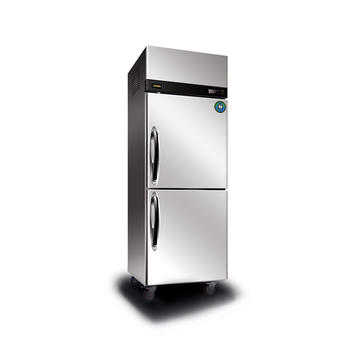
中文简体For most households of 2-4 people, an upright stainless steel refrigerator between 18 and 22 cubic feet provides the right balance of storage and kitchen footprint. Smaller households or compact kitchens are better served by 10-16 cubic foot models, while large families or commercial kitchens typically require 23+ cubic feet of capacity to meet daily storage demands.
Below, we break down refrigerator sizing by household need, explain how capacity relates to physical dimensions, and help you avoid the most common sizing mistakes when measuring your kitchen space.
Understanding Capacity: Cubic Feet vs. Physical Dimensions
Refrigerator capacity is measured in cubic feet, representing total usable interior storage space — not the exterior footprint of the unit. Two refrigerators with the same exterior width can have noticeably different cubic foot ratings depending on wall insulation thickness, shelf design, and interior layout efficiency.
This is why it's important to check both capacity (for storage planning) and exact exterior dimensions (for fitting your kitchen space) before purchasing — relying on capacity alone can lead to a unit that doesn't physically fit your designated space.
Refrigerator Size Categories Explained
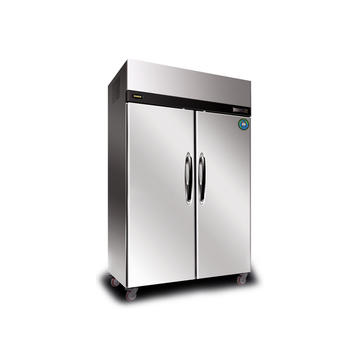
Upright stainless steel refrigerators are generally grouped into four size categories based on total capacity. The table below outlines typical dimensions and recommended household sizes for each.
| Category | Capacity Range | Typical Width | Best For |
|---|---|---|---|
| Compact | 10-16 cu. ft. | 24-28 inches | Studios, 1-2 person households |
| Standard | 18-22 cu. ft. | 30-33 inches | 2-4 person households |
| Large | 23-27 cu. ft. | 33-36 inches | 4-6 person households |
| Extra-Large / Commercial | 28+ cu. ft. | 36+ inches | Large families, commercial kitchens |
How Much Capacity Do You Actually Need?
A commonly cited guideline from appliance industry sources suggests allowing 4-6 cubic feet of refrigerator space per adult household member, with additional capacity if you cook frequently, buy groceries in bulk, or entertain often.
Capacity Guidelines by Household Size
- 1-2 people: 10-16 cubic feet is typically sufficient for regular grocery cycles.
- 3-4 people: 18-22 cubic feet accommodates weekly shopping without overcrowding.
- 5-6 people: 23-27 cubic feet allows for bulk buying and meal prepping.
- 6+ people or frequent entertaining: 28+ cubic feet, often paired with a secondary fridge or freezer.
If you frequently run out of space mid-week or struggle to organize groceries efficiently, it's a reliable sign you should size up to the next category rather than simply reorganizing the current unit.
Measuring Your Kitchen Space Correctly
Before purchasing, measure your designated refrigerator space carefully — width, height, and depth — and account for clearance needed for doors to open fully and air to circulate around the unit.
Clearance Requirements to Check
- Side clearance: Most manufacturers recommend at least 1 inch on each side for proper ventilation.
- Top clearance: Typically 1-2 inches above the unit to allow heat to dissipate from the condenser coils.
- Door swing clearance: Measure how far the door needs to open to fully access pull-out shelves and bins.
- Doorway and hallway width: Confirm the refrigerator can physically be delivered through doorways and turns leading to the kitchen.
A surprisingly common issue is buying a refrigerator that fits the kitchen but not the delivery path — always measure doorways, stairwells, and tight turns before finalizing a purchase, especially for large or extra-large units.
Counter-Depth vs. Standard-Depth Models
Depth is another important sizing consideration, particularly for kitchens where the refrigerator sits near countertops or islands.
- Standard-depth refrigerators typically measure 32-34 inches deep and protrude noticeably past standard countertops, but offer more interior capacity for a given width.
- Counter-depth refrigerators measure around 23-27 inches deep, aligning flush with countertops for a built-in look, but typically sacrifice 2-4 cubic feet of capacity compared to standard-depth models of the same width.
If kitchen aesthetics and a streamlined look are a priority, counter-depth is worth the capacity tradeoff. If maximizing storage is the priority, standard-depth delivers more usable space per dollar spent.
Common Sizing Mistakes to Avoid
Even careful shoppers can make sizing errors that lead to costly returns or awkward kitchen layouts. Watch for these common pitfalls:
- Measuring only the width and ignoring depth and height, leading to a unit that doesn't fit under cabinets or beside counters.
- Forgetting door swing direction, which can block walkways or prevent cabinets from opening nearby.
- Overlooking handle protrusion, which can add 2-4 inches to the total width needed in tight spaces.
- Choosing based on capacity alone without verifying exterior dimensions match the available space.
Final Recommendation
For most households of 2-4 people, an 18-22 cubic foot standard-depth upright stainless steel refrigerator offers the best balance of storage capacity and kitchen footprint. Smaller households or compact apartments are better served by 10-16 cubic foot compact models, while larger families or those who entertain frequently should consider 23+ cubic foot options.
Before finalizing your purchase, always measure your exact kitchen space — including clearance and delivery path — rather than relying on capacity ratings alone, since a refrigerator that doesn't physically fit is the most common and costly sizing mistake.