 English
 عربى
عربى Français
 русский
 Español
 中文简体
中文简体The key difference between single-temperature and multi-deck glass door display freezers lies in their structural design, temperature zone capability, product capacity, and intended retail application. Single-temperature units maintain one uniform temperature throughout the entire cabinet — ideal for storing a single product category such as ice cream or frozen meals. Multi-deck units feature multiple open or glass-fronted shelving tiers arranged vertically, designed for high-volume, high-visibility merchandising across a broader product range. Choosing the wrong configuration for your retail environment can result in product spoilage, energy waste, and lost sales — making this one of the most consequential equipment decisions a food retailer will make.
Defining the Two Types: How They Are Built and How They Work
Before comparing performance metrics, it is essential to understand the fundamental engineering differences between these two freezer configurations.
Single-Temperature Glass Door Display Freezers
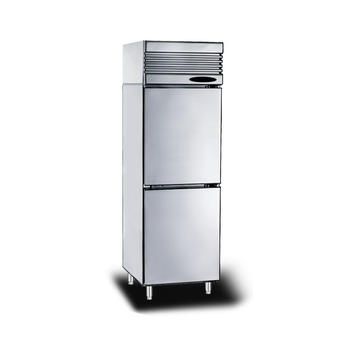
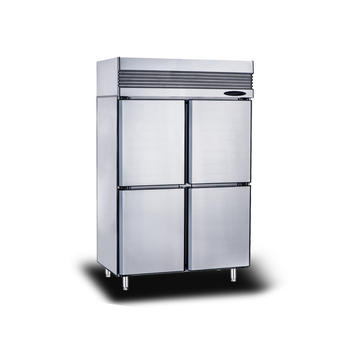
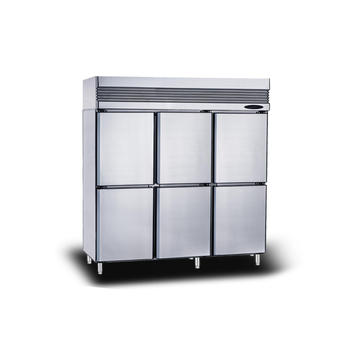
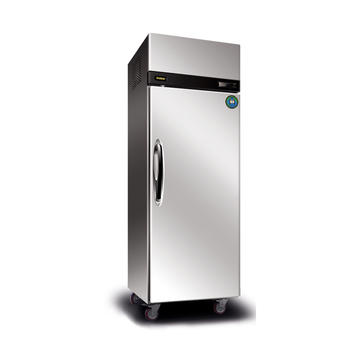
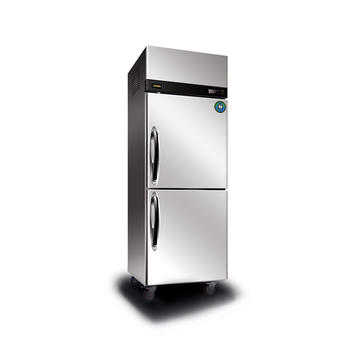
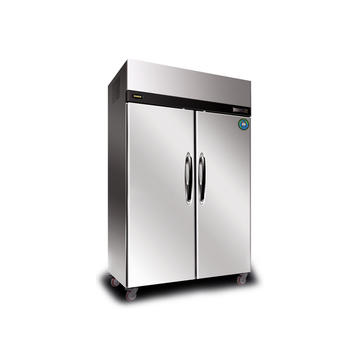
Single-temperature units are upright, enclosed cabinets with one or more glass doors providing full-height product visibility. A single refrigeration circuit maintains a uniform temperature — typically between -10°F and 0°F (-23°C to -18°C) for frozen applications — throughout the entire interior. The enclosed design with door seals significantly reduces cold air loss and ambient heat infiltration.
- Common configurations: 1-door, 2-door, 3-door, and 4-door reach-in units ranging from 23 to 75 cubic feet of storage capacity.
- Typical applications: Ice cream parlors, convenience stores, small grocery outlets, and foodservice back-of-house storage with customer-facing display.
- Refrigeration system: Self-contained (compressor built into the unit) or remote-condensing (compressor located externally to reduce in-store heat and noise).
Multi-Deck Glass Door Display Freezers
Multi-deck freezers are open-front or glass-door merchandising cases featuring multiple horizontal shelving tiers stacked vertically, typically 3 to 5 decks high. They are designed for rapid customer self-service access and maximum product face-out merchandising. Unlike single-temperature units, multi-deck cases use a curtain of cold air (air curtain) flowing across the open face to maintain temperature — a fundamentally different and more energy-intensive approach.
- Common configurations: Open-front multi-deck (no doors) or glass-door multi-deck (hinged or sliding doors added for energy savings), available in lengths of 4, 6, 8, and 12 feet.
- Typical applications: Supermarkets, hypermarkets, wholesale clubs, and large-format grocery stores with high customer throughput.
- Refrigeration system: Almost exclusively remote-condensing due to the heat load generated by open-front designs and the need for centralized refrigeration plant management in large retail environments.
Temperature Performance and Product Safety
Maintaining consistent sub-zero temperatures is the primary function of any display freezer. The two configurations achieve this differently — with significant implications for product safety and food quality.
| Performance Metric | Single-Temperature Unit | Multi-Deck Unit (Open Front) | Multi-Deck Unit (Glass Door) |
|---|---|---|---|
| Temperature Uniformity | Excellent (±2°F throughout cabinet) | Moderate (front shelves warmer) | Good (improved over open front) |
| Ambient Heat Sensitivity | Low (sealed cabinet) | High (open face exposed to store air) | Moderate |
| Door-Open Temperature Recovery | 2–5 minutes per door opening | Continuous exposure — no recovery cycle | 1–3 minutes per door opening |
| Operating Temperature Range | -10°F to 10°F (-23°C to -12°C) | 0°F to 10°F (-18°C to -12°C) | -5°F to 10°F (-21°C to -12°C) |
| FDA Frozen Food Compliance | Easily maintained | Requires careful load management | More reliably maintained |
A critical product safety consideration: in open-front multi-deck freezers, products placed on the top shelf or pushed to the front of shelves beyond the load limit line are frequently outside the air curtain's protective zone and may experience temperatures as high as 20°F (-7°C) — well above the FDA-recommended 0°F (-18°C) for frozen food storage. This is a leading cause of freezer burn and premature product degradation in supermarket environments.
Energy Consumption: A Major Operational Cost Differentiator
Energy consumption is one of the starkest differences between the two configurations — and one of the most consequential for long-term operating costs. Refrigeration typically accounts for 40–60% of a grocery store's total electricity consumption, making freezer cabinet selection a major financial decision.
- Single-temperature upright freezers consume approximately 3–8 kWh per day depending on cabinet size and door frequency. Their sealed design minimizes thermal infiltration and compressor cycling.
- Open-front multi-deck freezers consume 15–30 kWh per linear foot per day — making an 8-foot open multi-deck case consume up to 240 kWh daily, compared to roughly 6 kWh for a comparable single-temperature unit.
- Glass-door multi-deck freezers reduce energy use by 30–40% compared to open-front equivalents, according to the U.S. Department of Energy — a primary driver behind the industry-wide transition to door-equipped cases over the past decade.
At a national average commercial electricity rate of $0.12 per kWh, an open-front 8-foot multi-deck case costs approximately $10,512 per year to operate — versus roughly $263 per year for a two-door single-temperature upright. Even after accounting for the higher purchase price of single-temperature units in equivalent product capacity terms, the energy savings are decisive over a 10-year equipment lifecycle.
Merchandising Capacity and Product Visibility
The commercial purpose of a display freezer is not just preservation — it is selling. The two configurations approach merchandising very differently, with direct implications for sales per square foot of retail floor space.
Single-Temperature Units: Depth Over Breadth
- Typically offer 3–5 adjustable wire shelves per door section, with product stacked front-to-back.
- Products on rear shelves have significantly lower visibility, reducing impulse purchase rates for items not at eye level.
- Best suited for planned purchases (customers who know what they want) rather than impulse-driven categories.
- A standard 3-door upright freezer offers roughly 72 cubic feet of usable storage — practical for SKU-limited product ranges.
Multi-Deck Units: Maximum Face-Out Impact
- Offer 4–5 full-width shelving tiers, each with products facing directly toward the customer — dramatically increasing brand and product visibility.
- An 8-foot, 5-deck multi-deck case provides approximately 40 linear feet of shelf space — accommodating a far greater SKU count than any upright alternative.
- Studies by the Food Marketing Institute indicate that open-front display cases increase impulse purchases by 15–25% compared to enclosed upright cabinets for the same product category.
- Ideal for high-velocity frozen categories: frozen meals, pizza, breakfast items, ice cream novelties, and frozen vegetables where consumer browsing behavior drives purchasing decisions.
Installation, Footprint, and Store Layout Implications
The physical requirements for installing each freezer type differ substantially and must be factored into store design and renovation planning.
| Installation Factor | Single-Temperature Upright | Multi-Deck Case |
|---|---|---|
| Floor Space Required | Small (2–4 sq ft per door) | Large (typically 8–14 sq ft per 4-ft section) |
| Aisle Width Requirement | Standard (4–5 ft) | Wider (5–6 ft for open-front customer access) |
| Refrigeration Setup | Self-contained option available | Remote condensing unit required |
| HVAC Impact | Minimal | Significant — open cases add substantial heat and humidity load to store HVAC |
| Placement Flexibility | High — can be placed anywhere with power | Low — typically wall-mounted or island configurations |
| Initial Installation Cost | $3,000–$8,000 per unit | $15,000–$40,000+ per section (including refrigeration plant) |
A frequently overlooked cost in multi-deck installations is the increased HVAC load. Open-front freezer cases in a typical supermarket can increase store heating and cooling costs by 15–20% annually due to the continuous exchange of cold air from the cases with warm store air — an additional operational expense that does not appear in the freezer equipment budget.
Maintenance Requirements and Failure Risk
The complexity of each system directly affects maintenance burden, downtime risk, and long-term reliability.
- Single-temperature uprights are mechanically simpler, with self-contained units requiring only periodic condenser coil cleaning (every 3–6 months), door gasket inspection, and evaporator defrost cycle verification. Average service call frequency: once every 2–3 years under normal operating conditions.
- Multi-deck cases connected to a centralized refrigeration plant involve greater system complexity — including refrigerant line sets, electronic expansion valves, and case controllers. A failure in the central plant can affect all connected cases simultaneously, creating a catastrophic product loss risk that a single-unit failure in an upright system would never cause.
- Defrost management is more critical in multi-deck units, where frost buildup on evaporator coils — if not properly managed — can restrict airflow and compromise the air curtain's effectiveness within 24–48 hours in high-humidity store environments.
- Glass door anti-fog heating elements (present in both types) require periodic inspection; a failed heater causes condensation that obscures product visibility and reduces customer engagement with the display.
Which Configuration Is Right for Your Business?
The decision between single-temperature and multi-deck glass door display freezers should be driven by store size, product mix, customer traffic, and total cost of ownership — not just upfront price. Use this decision framework:
| Business Type | Recommended Configuration | Primary Reason |
|---|---|---|
| Ice cream parlor / dessert shop | Single-temperature upright | Precise low-temperature control; limited SKU range |
| Convenience store (under 3,000 sq ft) | Single-temperature (2–4 door) | Space efficiency; lower energy and installation cost |
| Mid-size grocery store | Glass-door multi-deck | High SKU count; impulse purchase optimization |
| Supermarket / hypermarket | Multi-deck (mix of open and glass-door) | Maximum merchandising capacity and customer throughput |
| Wholesale / cash-and-carry | Multi-deck island cases | Bulk product visibility; high-volume customer access |
| Pharmacy / health store | Single-temperature upright | Temperature precision; compact footprint |
For businesses currently operating open-front multi-deck cases and facing rising energy costs, retrofitting with glass doors is one of the highest-ROI equipment upgrades available — with payback periods typically between 2 and 4 years based on energy savings alone, before factoring in reduced HVAC load and improved product quality from more stable temperatures.