 English
 عربى
عربى Français
 русский
 Español
 中文简体
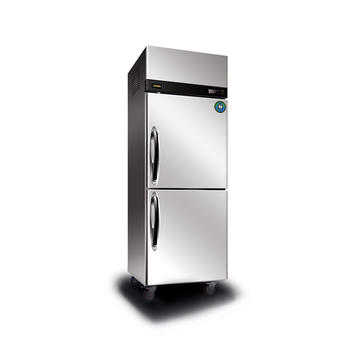
中文简体An upright stainless steel refrigerator is a long-term investment that enhances both storage efficiency and kitchen appearance. However, to keep it running smoothly for many years, proper maintenance is crucial.
1. Clean the Exterior Regularly
Stainless steel surfaces tend to attract fingerprints, smudges, and even minor water stains. Regular cleaning not only keeps your refrigerator visually appealing but also protects the exterior coating.
Detailed Tips:
- Use a soft microfiber cloth to avoid scratching the steel surface.
- Apply a non-abrasive stainless steel cleaner or mild dish soap diluted with warm water.
- Always wipe in the direction of the steel grain, not in circles.
- Avoid bleach, ammonia, or scrub pads, which can damage the protective finish.
- For stubborn stains, use a mixture of white vinegar + water as a safe natural cleaner.
2. Keep the Interior Hygienic
A clean interior ensures food safety, prevents cross-contamination, and helps maintain fresh air circulation.
Detailed Tips:
- Remove shelves and drawers every 2–3 months for a deep clean.
- Wash components with warm, soapy water; avoid hot water that may crack plastic parts.
- Wipe inside walls using a mix of 1 part vinegar to 3 parts water.
- For lingering odors, place an open box of baking soda or activated charcoal inside.
3. Check and Clean the Door Seals
The door gaskets (seals) are essential for keeping cold air in. Any loose or dirty seals reduce cooling efficiency and increase electricity consumption.
Detailed Tips:
- Feel around the gasket for cold air escaping—this indicates poor sealing.
- Clean seals using mild soap and warm water at least once a month.
- Apply a thin layer of petroleum jelly to keep the rubber soft and flexible.
- If seals look cracked, brittle, or deformed, they should be replaced immediately.
4. Vacuum the Condenser Coils
The condenser coils help release heat from the refrigerator. When they get covered in dust, pet hair, or kitchen grease, the refrigerator must work overtime.
Detailed Tips:
- Locate coils at the back or bottom of the unit.
- Vacuum them every 6 months, or more often if you have pets.
- Use a coil-cleaning brush to reach tight spots.
- This reduces the workload on the compressor and significantly extends its lifespan.
5. Monitor the Temperature Settings
Incorrect temperature settings can lead to food spoilage or unnecessary energy usage.
Ideal Temperature Ranges:
- Refrigerator: 37–40°F (3–4°C)
- Freezer: 0°F (-18°C)
Detailed Tips:
- Use a thermometer to confirm accuracy.
- Avoid stuffing the fridge full—this blocks airflow.
- If you notice inconsistent cooling, check vents and seals first.
Refrigerator Maintenance Frequency Table
| Maintenance Task | Recommended Frequency | Notes |
|---|---|---|
| Clean stainless steel exterior | Weekly or as needed | Avoid abrasive cleaners |
| Deep-clean interior | Every 2–3 months | Use mild soap or vinegar solution |
| Clean door seals | Monthly | Check for cracks or air leakage |
| Vacuum condenser coils | Every 6 months | More often if pets are present |
| Replace water filter | Every 6 months | For models with dispensers/ice makers |
| Check temperature accuracy | Monthly | Use fridge thermometer |
| Defrost (non-frost-free models) | When frost reaches ¼ inch | Never use sharp tools |
6. Defrost When Necessary
Not all refrigerators are frost-free. Ice buildup can reduce efficiency and storage space.
Detailed Tips:
- Defrost when ice thickness reaches about 6 mm (¼ inch).
- Move food to a cooler temporarily.
- Turn off the refrigerator and leave the door open.
- Place towels to absorb meltwater.
- Never use knives or sharp tools to remove ice—they can puncture coils.
7. Organize Food for Better Airflow
Proper food organization ensures stable internal temperature and reduces energy waste.
Detailed Tips:
- Do not block interior vents—this restricts airflow.
- Keep raw meat in sealed containers on the lowest shelf to avoid contamination.
- Store leftovers in airtight containers to prevent odor spread.
- Label and date food to maintain rotation and reduce spoilage.
8. Check the Drip Pan and Drain Hole
The drainage system handles condensation. If blocked, it can cause leaks or foul odors.
Detailed Tips:
- Locate the drain hole at the back of the interior compartment.
- Gently clean with warm water and a soft brush or cotton swab.
- Remove and empty the drip pan every few months (if accessible).
- Make sure no mold or mildew is forming.
9. Replace Water Filters on Time
If your refrigerator dispenses water or makes ice, water filter maintenance is essential.
Detailed Tips:
- Most filters last about 6 months.
- Old filters can harbor bacteria and reduce water flow.
- Follow the manufacturer’s instructions to install replacement filters correctly.
10. Keep the Refrigerator Level
A refrigerator that isn’t level can cause doors to not seal properly or even create noise.
Detailed Tips:
- Use a bubble level tool to check alignment.
- Adjust the front feet by turning them clockwise or counterclockwise.
- Ensure the door automatically swings closed when left slightly open.