 English
 عربى
عربى Français
 русский
 Español
 中文简体
中文简体How Does the UA Blast Freezer Special Refrigerator Achieve Ultra-Fast Core Cooling?
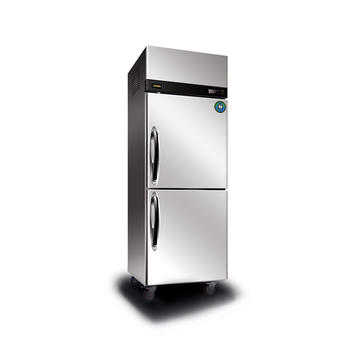
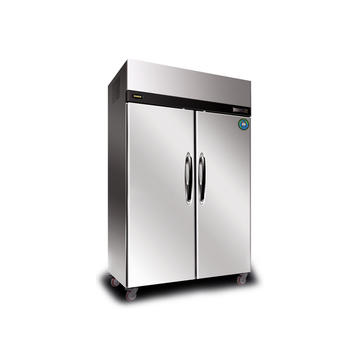
In the fast-paced global food industry of 2026, the speed of heat extraction is the single most critical factor in determining product quality, safety, and shelf life. A UA Blast Freezer Special Refrigerator is not a standard storage unit; it is a specialized thermal exchange system designed to pull heat from the “thermal center” or core of a product at an extraordinary rate. While a standard commercial freezer may take 12 to 24 hours to freeze high-density proteins, a UA-grade blast freezer completes this process in as little as 90 to 240 minutes. Achieving this “ultra-fast core cooling” requires a perfect synergy of high-velocity airflow, massive refrigeration capacity, and advanced electronic controls to bypass the “Critical Zone” of ice crystal formation.
The Thermodynamics of Rapid Heat Extraction
To cool the core of a product, heat must travel from the center to the surface through conduction and then be removed from the surface through convection. In large-scale food production, the biggest bottleneck is the stagnant air layer surrounding the product, which acts as an insulator. The UA Blast Freezer utilizes a high-pressure plenum system to strip away this boundary layer. By maintaining a constant, turbulent flow of sub-zero air across every square centimeter of the product’s surface, the machine maximizes the temperature gradient, forcing the core temperature to drop rapidly without dehydrating the surface of the food.
Bypassing the Critical Zone ($0^\circ C$ to $-5^\circ C$)
The most crucial phase of freezing occurs between $0^\circ C$ and $-5^\circ C$, known as the “Zone of Maximum Ice Crystal Formation.” In slow-freezing environments, water molecules have time to bond into large, jagged crystals that puncture cell membranes—a process that leads to “drip loss” and mushy textures upon thawing. A UA Special Refrigerator is engineered to “blast” through this temperature range so quickly that water molecules are flash-frozen into microscopic, rounded crystals. This preserves the cellular integrity of high-value items like sashimi-grade seafood or Wagyu beef, ensuring they retain their original moisture, flavor, and “bite” once served.
High-Velocity Airflow and Plenum Engineering
The “Blast” in UA Blast Freezer refers to the specialized aerodynamic design within the cabinet. Achieving ultra-fast cooling is impossible without a sophisticated airflow management system that ensures zero “dead zones” within the cooling chamber. In 2026, modern industrial kitchens rely on this precision to meet strict HACCP compliance standards while maintaining high throughput.
Targeted Laminar and Turbulent Airflow
Unlike a standard refrigerator that relies on natural convection, a UA unit uses industrial-grade centrifugal fans. These fans are positioned behind a specialized “plenum wall” that directs air horizontally across the trays rather than just blowing it randomly.
- Plenum Design: The internal baffles are designed to equalize air pressure. This means that a tray placed at the bottom of the rack receives the exact same cooling power as a tray at the top, ensuring batch consistency.
- High-Static Pressure: The fans are built to maintain high velocity even when the freezer is fully loaded. This is critical because a “choke point” in airflow would lead to uneven cooling, potentially leaving the core of products in the center of the rack dangerously warm for too long.
Strategic Product Placement and Cross-Flow Ventilation
The UA Special Refrigerator is designed to accommodate standardized GN (Gastronorm) or bakery trays with specific vertical spacing. This spacing is mathematically calculated to allow for “cross-flow” ventilation. For B2B users, this means that even the most high-density loads—such as thick-cut steaks or large pans of hot lasagna—can be brought from $70^\circ C$ to $3^\circ C$ (chilling) or $-18^\circ C$ (freezing) within the strict time limits required by global food safety laws. By optimizing the path of the air, the machine minimizes energy waste and maximizes the speed of thermal transfer.
High-Capacity Refrigeration and Evaporator Technology
To sustain ultra-fast cooling, the UA Blast Freezer Special Refrigerator must be able to “dump” an incredible amount of heat energy into the atmosphere in a very short time. This requires a refrigeration circuit that is significantly more robust than those found in standard storage freezers.
Over-Sized Evaporator Coils and Anti-Frost Design
The heart of the UA system is an oversized evaporator with a high surface-area-to-volume ratio. Because these machines often handle steaming hot food, the evaporator must deal with massive amounts of moisture.
- Fin Spacing: The fins on a blast freezer evaporator are spaced wider than those in a standard freezer (typically 7mm to 10mm). This prevents “flash frosting”—where moisture from hot food instantly turns to ice on the coils—from clogging the airflow and stalling the cooling process.
- Refrigerant Flow Control: High-efficiency refrigerants are pulsed through the coils using Electronic Expansion Valves (EEV). These valves provide micron-level control over the refrigerant flow, allowing the system to respond instantly to the massive “heat load” that occurs when a rack of hot food is first wheeled into the chamber.
High-Torque Industrial Compressors
The compressors used in UA Blast Freezers are built for “heavy-duty pull-down.” While a storage freezer’s compressor is designed to maintain a stable temperature, a UA compressor is designed to run at maximum capacity to extract heat rapidly.
- Multi-Stage Cooling: Some ultra-low temperature UA models utilize two-stage or “cascade” refrigeration systems to reach core temperatures as low as $-40^\circ C$ or even $-60^\circ C$ for specialized pharmaceutical or high-end biological applications. This level of power ensures that the “cold chain” starts with the highest possible level of safety and quality.
Technical Performance Comparison Table
| Feature | Standard Commercial Freezer | UA Blast Freezer Special Refrigerator |
|---|---|---|
| Cooling Velocity | Low (Natural Convection) | High (Forced Air Plenum) |
| Freezing Time | 12 – 24 Hours | 90 – 240 Minutes |
| Ice Crystal Size | Large (Cell-Damaging) | Microscopic (Protective) |
| HACCP Compliance | Manual Tracking Required | Fully Integrated Logic & Logging |
| Evaporator Fin Gap | 3mm – 5mm | 7mm – 10mm (Anti-clog) |
| Primary Function | Long-term Temperature Maintenance | Rapid Thermal Extraction |
Intelligent Control Systems and Core Probing
The “Special” designation of the UA Refrigerator is often attributed to its intelligent “Brain”—the PLC (Programmable Logic Controller) that monitors the cooling cycle in real-time. In an era of smart manufacturing, this connectivity is essential for data-driven food safety.
Multi-Point Core Temperature Probes
Ultra-fast cooling cannot be left to guesswork. Every UA Blast Freezer is equipped with a heated food probe that is inserted into the thickest part of the product.
- Direct Core Feedback: The machine does not stop when the air reaches a certain temperature; it stops when the core of the food reaches the target. This eliminates the risk of “surface-frozen” products that are still warm and dangerous on the inside.
- Automatic Hard/Soft Chilling: The intelligent controller can distinguish between “Hard Chilling” (for dense meats) and “Soft Chilling” (for delicate items like cream cakes). If the surface begins to freeze too quickly while the core is still warm, the system modulates the fan speed and air temperature to prevent freezer burn or “skin” formation.
Integrated Data Logging and IoT Connectivity
In 2026, food safety audits are increasingly digitized. The UA Special Refrigerator features built-in Wi-Fi and Bluetooth connectivity to export cooling logs directly to a central management system.
- Compliance Reporting: The system automatically generates a PDF or CSV report for every cycle, proving that the product passed through the “Danger Zone” ($60^\circ C$ to $10^\circ C$) within the legally required timeframe.
- Predictive Maintenance: The cloud-connected system monitors the health of the compressor and fans, alerting the facility manager via a smartphone app if a component shows signs of wear. This proactive approach prevents costly downtime and protects thousands of dollars’ worth of inventory.
FAQ: UA Blast Freezer Special Refrigerator
What is the difference between a “Shock Freezer” and a “Blast Freezer”?
The terms are often used interchangeably. However, “Shock Freezing” typically refers to the ultra-fast process of reaching $-18^\circ C$ at the core in under 4 hours, whereas “Blast Chilling” refers to bringing hot food down to a safe refrigerated temperature ($3^\circ C$) quickly. The UA Special Refrigerator is capable of performing both functions with professional precision.
Can I put steaming hot food directly into the UA Blast Freezer?
Yes. One of the primary advantages of a UA unit is its ability to handle “Hot-to-Cold” transitions immediately. However, for maximum energy efficiency, many operators allow food to “steam off” for a few minutes before loading to reduce the initial moisture load on the evaporator coils.
How does the “Hard Chill” mode prevent damage to delicate foods?
In “Hard Chill” mode, the air temperature is initially very low to pull heat out fast. In “Soft Chill” mode, the controller ensures the air temperature never drops below $0^\circ C$. This prevents the edges of delicate items (like berries or thin sauces) from freezing while the center is still cooling.
Does a blast freezer consume a lot of electricity?
While the instantaneous power draw is higher than a standard storage freezer, the total energy consumed per kilogram of food processed is often lower because the cooling cycle is significantly shorter and more efficient. It is a more sustainable choice for high-volume production.
References and Further Reading
- International Journal of Refrigeration: “Heat Transfer Coefficients in High-Velocity Blast Freezing Systems (2025 Edition).”
- FDA/HACCP Guidelines 2026: “Safe Cooling and Freezing Parameters for Commercial Food Service and Industrial Processing.”
- Journal of Food Engineering: “The Impact of Flash-Freezing on Cellular Structure and Drip Loss in High-Protein Foods.”