 English
 عربى
عربى Français
 русский
 Español
 中文简体
中文简体Introduction: The Strategic Importance of the Right Display Freezer
In the modern retail environment, a glass door display freezer is much more than just a piece of refrigeration equipment; it is a “silent salesman” dedicated to driving your store’s profitability. Whether you are showcasing premium ice cream, frozen ready-to-eat meals, or fresh frozen seafood, the visual presentation of your products directly dictates consumer purchasing decisions. For convenience store owners, supermarkets, or restaurant managers, the primary dilemma often boils down to: Should I choose a compact single-door display or a high-capacity double-door model?
This decision is not a simple matter of “big versus small.” It involves a complex calculation of floor space efficiency, energy cost control, foot traffic flow, and brand image. A properly selected freezer utilizes transparent glass and brilliant lighting to trigger “impulse purchases” from customers. Conversely, an ill-fitted unit can lead to crowded aisles, skyrocketing electricity bills, and lost sales opportunities due to insufficient display space.
The Case for Single Glass Door Display Freezers: Compact and Powerful
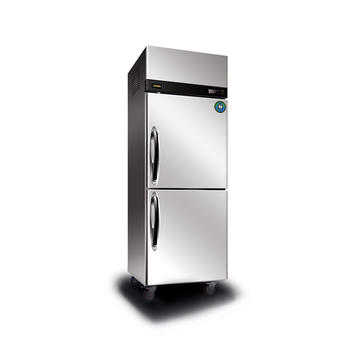
For boutique cafes, gas station convenience stores, or retail outlets with limited square footage, the single glass door display freezer is the ultimate synonym for floor space efficiency. These units are engineered to provide maximum visual impact within the smallest possible physical footprint. They are often strategically placed near checkout counters or at the end of aisles as “golden display spots” for high-margin specialty items.
Maximizing Small Floor Plans
An upright single-door freezer typically features a width between 600mm and 750mm. This slender design allows shop owners to utilize vertical space rather than valuable horizontal floor area. In premium commercial districts where rental costs are high, every square meter of business space must generate value. A single-door unit can easily fit into corners or between two rows of shelving, turning “dead zones” into profit centers.
Targeted Merchandising and Branding
Single-door units are ideal for “category focusing.” For instance, you can dedicate a single unit exclusively to artisanal gelato or organic frozen snacks. Through highly concentrated visual presentation, you signal “professionalism” and “premium quality” to your customers. Furthermore, maintenance for these units is relatively simple, and for startups or small eateries, the initial investment pressure is significantly lower.
Energy Efficiency and Operational Costs
According to search trends, “energy-efficient commercial freezer” remains a top-tier B2B search term. Because single-door freezers have smaller internal volumes, their compressor power requirements are generally lower. More importantly, a smaller door means less cold air escape during openings, which significantly reduces annual operating costs in high-frequency retail environments.
The Case for Double Glass Door Display Freezers: Scale and Impact
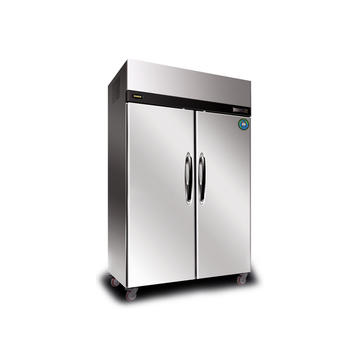
When your business model is built on “diverse selection” and “high customer volume,” the double glass door display freezer becomes an indispensable asset. Often referred to as “Merchandiser Freezers,” these units serve as the central visual anchor for the frozen sections of supermarkets and large-scale convenience stores.
Unrivaled Product Visibility and Variety
The greatest advantage of a double-door display is its massive “billboard effect.” The expanded glass surface area allows you to lay out an entire product line horizontally—from frozen dim sum and meats to semi-finished meal kits—all within a single sightline for the consumer. This clear transparency encourages customers to linger longer. Research suggests that as display area doubles, consumer purchase desire increases proportionally.
Managing High-Volume Traffic
In high-traffic environments, the temperature recovery capability of a freezer is critical. Double-door units are typically equipped with high-power commercial-grade compressors and advanced ventilated cooling systems (Forced Air). Even during peak hours when two doors are opened alternately, the system can rapidly pull the internal temperature back to standard levels. Additionally, the double-door design allows two customers to browse different sections simultaneously without interference, which is vital for improving the shopping experience and reducing congestion.
Professional Storage and Inventory Management
With capacities often exceeding 1000L, double-door units facilitate superior inventory management. This allows you to reduce the frequency of restocking trips to the warehouse by keeping more inventory directly on the sales front. This not only lowers labor costs but also ensures that shelves always look “fully loaded,” giving customers a sense of abundance and reliability.
Technical Comparison: Single Door vs. Double Door Freezers
To help you compare the two options more intuitively, we have summarized the core technical specifications in the table below, which serves as an excellent reference for B2B procurement decisions.
| Feature | Single Glass Door Freezer | Double Glass Door Freezer |
|---|---|---|
| Average Width | 600mm - 750mm | 1200mm - 1500mm |
| Storage Capacity | 300L - 500L | 1000L - 1500L |
| Best For | Small cafes, checkout areas | Large supermarkets, specialty frozen stores |
| Visual Impact | Targeted focus, new product promos | Macro display, full category showcase |
| Energy Performance | Excellent for low-power requirements | Higher, but offers better ROI per sq. ft. |
| Cooling Type | Fan-assisted or Static | Strong Ventilated (Forced Air) |
Critical Factors to Consider Before Purchasing
Regardless of the configuration you choose, as a commercial investor, you must also pay attention to the following technical indicators that affect long-term profitability.
Anti-Fog and Heated Glass Technology
The biggest technical challenge for glass door freezers is “fogging.” If consumers cannot clearly see the products inside, the display loses its purpose. High-quality commercial display freezers must be equipped with Heated Glass. By embedding ultra-fine heating wires between glass layers, the surface temperature is kept slightly above the dew point, ensuring a crystal-clear view even in humid environments. Furthermore, the use of triple-pane tempered Low-E glass effectively insulates against external heat to maintain internal consistency.
LED Lighting and Product Presentation
Lighting is the soul of retail. Modern high-end display units have moved away from top-mounted lightboxes in favor of Vertical LED Lighting strips installed on both sides of the door frame. This lighting scheme ensures that all products—from the top shelf to the bottom—are evenly illuminated, eliminating dark spots. Lighting with a high Color Rendering Index (CRI) makes food packaging look more vibrant and enticing, directly stimulating the urge to buy.
Intelligent Temperature Control
When storing temperature-sensitive items like ice cream, a difference of just one degree can affect texture. Opt for models equipped with a Digital Thermostat. These not only display real-time temperatures accurately but also manage automatic defrost cycles to prevent evaporator icing, ensuring the machine always operates at peak energy efficiency.
Installation and Maintenance for Longevity
Purchasing a high-quality upright display freezer is only the first step; proper installation and maintenance are the keys to extending equipment life and reducing failure rates.
Strategic Placement and Ventilation
Freezers discharge heat while cooling. Therefore, the installation site must have excellent ventilation. For both single and double-door models, at least 10cm of clearance should be reserved at the rear and sides of the unit. If placed in a cramped closet, heat buildup will cause the compressor to overheat and trip frequently, which not only consumes more power but significantly shortens the compressor’s lifespan.
Cleaning the Condenser Coils
The condenser fins are the heart of heat dissipation. In commercial environments, dust, grease, and debris easily clog the condenser. We recommend that businesses perform a professional cleaning every three months. A clean condenser can reduce energy consumption by more than 15%. Simultaneously, regularly checking the seal of the door Gasket to prevent cold air leakage is a mandatory daily task for every store manager.
FAQ: Frequently Asked Questions
-
Q: What should I do if the freezer glass door fogs up?
-
A: First, check if the heated glass switch is turned on. If the ambient humidity is too high, consider lowering the indoor AC temperature or selecting a model with higher-power de-misting glass.
-
Q: Which is more energy-efficient: single or double door?
-
A: In terms of total wattage, single doors use less power. However, when calculated by “energy per cubic foot,” large double-door units are often more efficient.
-
Q: Does ice cream require a specific temperature?
-
A: Yes. While standard frozen food is fine at -18°C, ice cream usually requires -22°C to -25°C to maintain the perfect hardness and texture.
-
: Do you offer customization services (e.g., Logo stickers)?
-
A: As a manufacturer, we provide comprehensive OEM/ODM services, including branded body graphics, custom lightboxes, and personalized shelf configurations.
References & Industry Citations
- U.S. Department of Energy (DOE): “Energy Conservation Standards for Commercial Refrigeration Equipment.”
- ASHRAE: “Refrigeration Handbook - Performance of Glass Door Display Cases in Retail Environments.”
- Journal of Food Engineering: “Thermal Stability and Energy Optimization in Reach-in Freezers.”
- NACS (The Association for Convenience & Fuel Retailing): “The Role of Cold Vault Placement in Increasing In-Store Sales.”