 English
 عربى
عربى Français
 русский
 Español
 中文简体
中文简体During a busy dinner service, a kitchen door swings open dozens of times an hour. If the refrigerator's temperature drift stays within a single degree Celsius, the ingredients keep their texture and shelf life. If the unit cannot recover from repeated door openings, you notice the difference in the first month. For a commercial kitchen, choosing a high-end refrigerator is not about cosmetic extras. It is about repeatable performance under real operating pressure, with materials and components that survive daily cleaning, high ambient temperatures, and frequent loading.
What Makes a Commercial Refrigerator High-End
A high-end commercial refrigerator differs from an ordinary unit in four measurable areas. First, temperature recovery speed. When the door opens, warm air enters; the compressor and fan must pull the interior back to its set point quickly. Second, temperature uniformity. A well-designed airflow system keeps the difference between the warmest and coolest shelf small enough that you do not need to rearrange food items for safety. Third, construction quality. Stainless steel AISI 304 or an equivalent corrosion-resistant finish matters in a kitchen where humidity, salt, and acidic foods are present every day. Fourth, component reliability. The compressor, condenser, and electronic thermostat are the parts that determine whether the unit runs for eight years or fails after three.
For a prep area where chefs access ingredients constantly, a stainless steel counter refrigerator offers the combination of sturdy work surface, close-range storage, and tighter temperature control. This is the type of unit that earns its cost during peak hours.
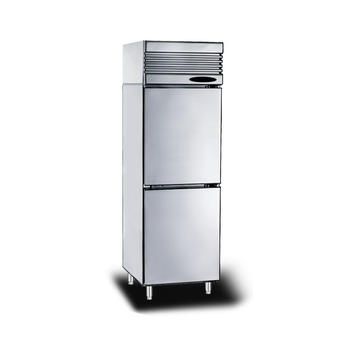
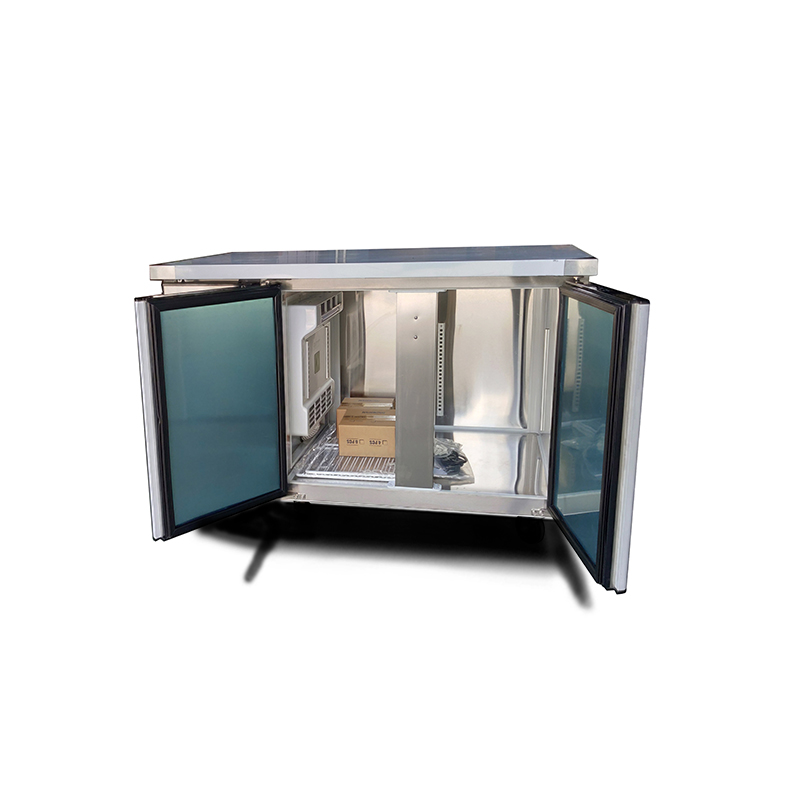 Two-Door Stainless Steel Counter Refrigerator for Prep AreasThis two-door stainless steel counter refrigerator combines a sturdy work surface with close-range storage, ideal for prep stations. It offers tight temperature control for peak-hour efficiency.View Product →
Key Specifications to Review Before Buying
The table below groups the most important checks you should perform before approving a purchase. Use it as a quick comparison sheet when you evaluate different models.
| Feature | What to Check | Why It Matters |
|---|---|---|
| Door configuration | Half door vs full door vs glass door | Half doors limit cold-air loss when you reach for one tray; glass doors turn inventory into a sales tool. |
| Exterior material | Stainless steel vs colorbond | Stainless steel resists corrosion and cleans more easily in wet environments; colorbond reduces initial cost. |
| Cooling system | Air-cooled condenser vs static | Air-cooled systems maintain performance in hot rooms and have a more predictable defrost cycle. |
| Temperature control | Digital thermostat with alarm | Digital control holds a tighter tolerance and alerts you before food safety is compromised. |
Pay particular attention to the door configuration. In a busy back-of-house operation, a two-door stainless steel upright chiller with half doors is often more practical than a full-height single door. The smaller the opening each time an employee reaches in, the faster the interior temperature recovers.
Choosing the Right Configuration for Your Kitchen
There is no single "best" layout. The right choice depends on how your staff moves through the space and what product you store.
Upright units for dry storage and bulk ingredients
An upright stainless steel refrigerator is the backbone of a foodservice kitchen. It provides height-efficient storage for large containers, sheet pans, and packaged items. In a hot, humid kitchen, a unit with an insulated body and a robust air-cooled system will keep its set point even when the ambient temperature climbs. Look for models with digital temperature display and automatic defrost to avoid daily manual attention.
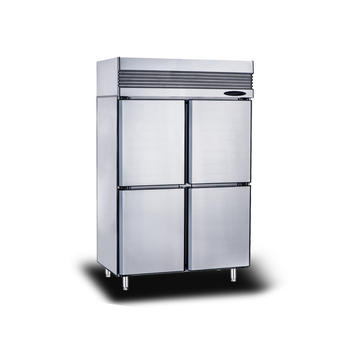
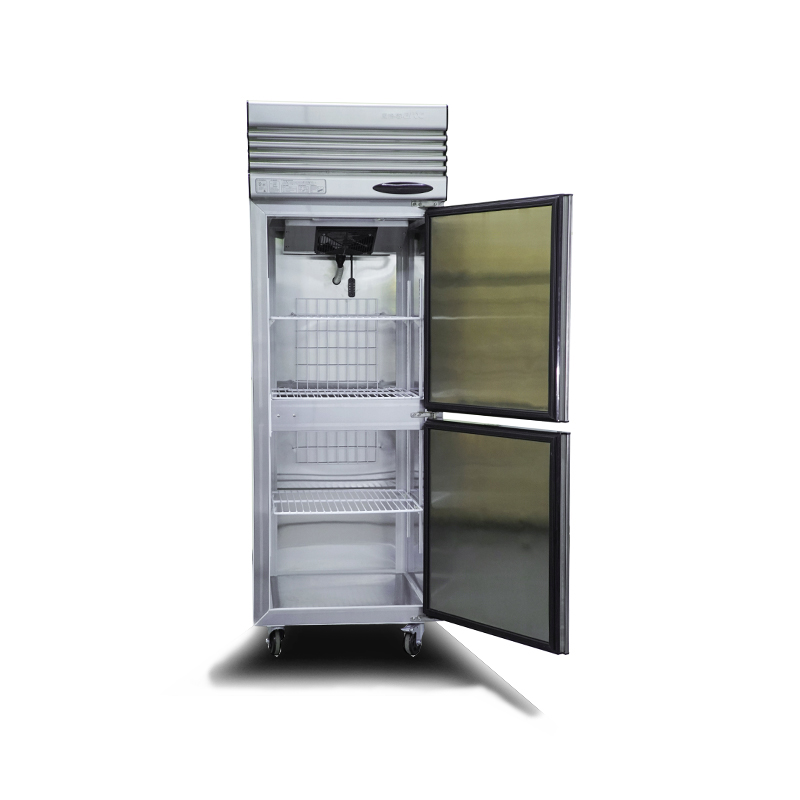 Upright Half-Door Stainless Steel Chiller for KitchensThis upright half-door chiller provides space-efficient storage for large containers and sheet pans. Its robust cooling system handles high ambient temperatures, and features digital display and auto-defrost.View Product →
Counter-height units for prep and assembly
When chefs work at a station for hours, a counter refrigerator places ingredients at arm's reach without requiring a walk to a distant cold room. The stainless steel top doubles as a chopping surface, which saves space in compact kitchens. A 1200mm two-door model offers enough capacity for a single prep line while keeping the working height comfortable.
Glass-door units for display and merchandising
If your establishment sells beverages, deli items, or desserts, a glass-door display chiller shows the product while keeping it at the correct serving temperature. Colorbond or stainless steel options allow you to match your site's design and budget. Airflow design matters here: the wrong configuration causes fogging or uneven cooling, which shortens the shelf life of displayed goods.
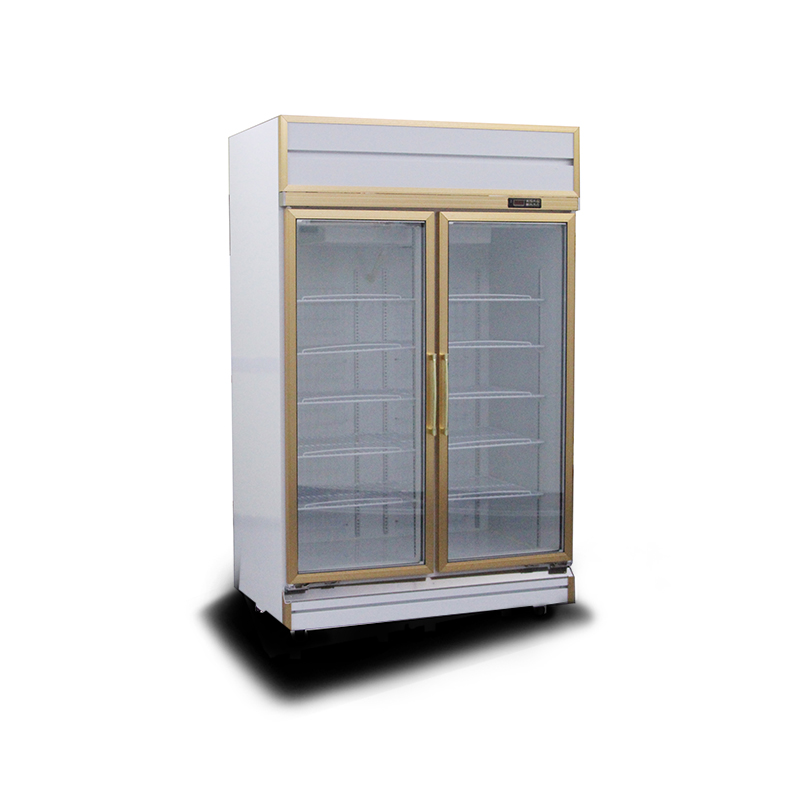 Colorbond Glass-Door Display Chiller for RetailThis glass-door display chiller keeps beverages, deli items, or desserts at serving temperature while showcasing them. Colorbond finish suits design and budget, with proper airflow to prevent fogging.View Product →
Reducing Long-Term Operating Costs
A high-end refrigerator costs more upfront, but the operational savings appear in three areas. Energy consumption is the most visible. Units with efficient compressors and electronic expansion valves draw less current, especially if the kitchen is already near its electrical capacity. Maintenance is the second area. A stainless steel surface resists scratches and rust, so it requires fewer repairs and replacements. The third area is downtime. When a critical unit fails during a weekend service, the cost of lost sales and food waste is often higher than the repair bill itself.
One practical specification to check is the condenser. An air-cooled condenser that is easy to clean keeps heat exchange efficient and extends compressor life. If you want to build a preventive maintenance program, follow a maintenance schedule for stainless steel refrigerators from the start.
Verifying the Manufacturer Behind the Unit
Even the most carefully specified refrigerator will fail without a dependable maker behind it. Ask about the factory capacity, material sourcing, and quality control procedures. A supplier with a long history in commercial refrigeration and in-house production of evaporators and condensers can respond more quickly to custom requirements.
For example, Redbowl operates a factory in Shengzhou, Zhejiang, approximately 1.5 hours from Hangzhou and 1 hour from Ningbo Port. The company's factory facilities in mainland China support export shipping and short lead times for large orders. When you evaluate a supplier, visit a production site if possible, or ask for photographs of current factory lines. You want to see the actual machines, not just a catalog.
Selecting a high-end commercial refrigerator is a decision about stability, durability, and the hidden cost of failure. Focus on temperature recovery, materials, condenser design, and the manufacturer's actual manufacturing footprint. These factors decide whether your kitchen runs smoothly or whether you fight your cold storage order every week.