 English
 عربى
عربى Français
 русский
 Español
 中文简体
中文简体When a bar starts building a serious wine list, the storage question arrives early. A standard under-counter chiller can hold bottles at a fixed temperature, but it does not account for how the cabinet will look in the dining area or how quickly staff need to reach the most-ordered white. Our recommendation is to choose a commercial wine bar cooler that fits the layout of the bar, protects the wine from temperature swings, and keeps the front of the cabinet presentable for merchandising. The rest of this guide explains what to check before you buy.
What a Wine Bar Cooler Must Deliver
A wine bar cooler is a refrigerated cabinet designed to store wine at a stable, controlled temperature. For practical service, red wines are usually held between 12 and 18°C (54 to 64°F), white wines between 8 and 12°C (46 to 54°F), and sparkling wines between 6 and 10°C (43 to 50°F). Many single-zone commercial cabinets are set to a middle temperature around 8 to 12°C, which suits whites and sparkling but can be slightly warm for reds. If your bar pours multiple wine styles, look for a unit with either a wide digital thermostat range or a dual-zone design.
Temperature stability matters as much as the reading on the dial. If the cabinet repeatedly drifts by more than a few degrees, the wine can oxidize faster and lose its fruit character. The best units maintain a variation of less than 2°C across the cooling cycle. Compressor-driven cabinets remain the standard for busy bars because they recover quickly after the door is opened, while thermoelectric units tend to struggle in high-heat or high-traffic environments.
Humidity is another factor, though it is often ignored. Wine corks can dry out in very dry air, and mold can grow in very damp conditions. A commercial wine bar cooler with well-sealed glass doors and robust gaskets will hold a more reasonable internal humidity level than an open-shelf cooler or one with weak door seals. If your bar is in a humid coastal location, a heated glass door option can also reduce condensation.
Bar Layout and Cabinet Configurations
The location of the cooler determines which configuration is right for your operation. Under-counter units fit beneath a bar top and keep bottles within arms' reach. Glass door display cabinets let customers see the selection and encourage impulse purchases. Counter-height units provide a work surface for open bottles, glasses, and garnishes. Redbowl's product range covers these three formats, and a few key examples are worth noting.
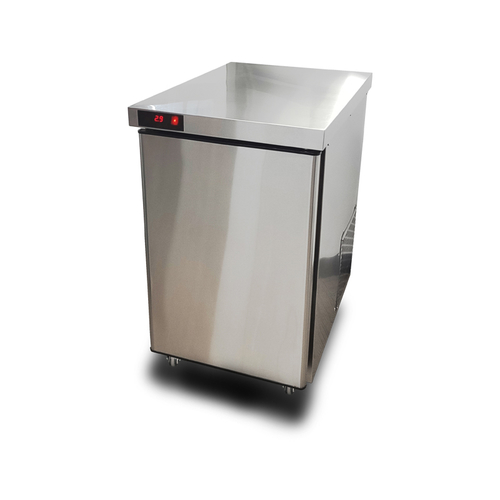 Redbowl One-Door Under-Counter Beer Bar Chiller for Commercial UseThis under-counter chiller fits beneath a bar top for space efficiency. It features a robust compressor and heavy-duty shelves, making it suitable for commercial duty behind the service counter.View Product →
For a bar where the cooler sits behind the service counter, an under-counter chiller is the most space-efficient option. Redbowl's one-door counter chiller can be installed beneath a countertop and keeps the bartender's storage close at hand. The cabinet is built for commercial duty, using a robust compressor and heavy-duty shelves that withstand frequent opening and closing.
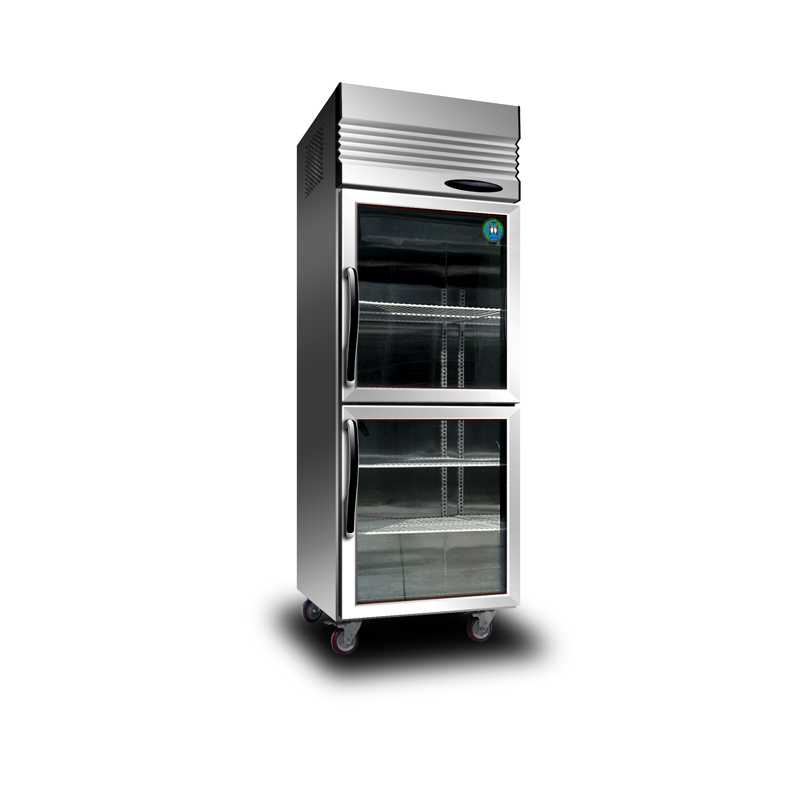 Stainless Steel Glass Door Display Refrigerator for Wine MerchandisingThis stainless steel display refrigerator with a glass door offers a clear view of the front row of bottles. It operates at +2 to +12°C and is suited for front-of-house settings where guests can see the wine selection.View Product →
Where wine is used as a merchandising element, a glass door display refrigerator is more effective than a solid-door unit. The stainless steel version offers a clean, professional appearance and provides a clear view of the front row of bottles. This model works well in a front-of-house setting where guests can see the wine selection before ordering.
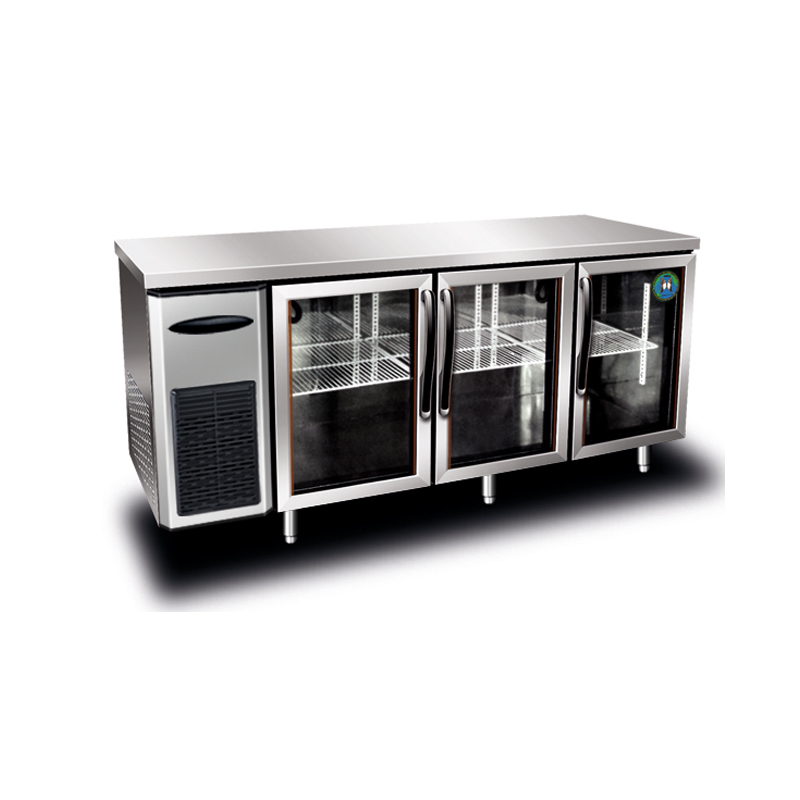 Heated Glass Under-Counter Chiller and Freezer with Two or Three DoorsThis counter chiller combines a chilled display with a working surface. The heated glass door prevents fogging, ensuring a clear display. It offers precise temperature control and large-capacity storage, ideal for compact bars with multiple uses.View Product →
If the bar also serves food or needs a prep surface, a glass door counter chiller combines a chilled display with a working top. The heated glass option minimizes fogging and keeps the display presentable even when the kitchen is busy. This type of unit is useful in a compact bar where every piece of equipment must serve more than one purpose.
Door construction deserves attention because it affects both durability and presentation. Stainless steel frames are easy to clean and resist corrosion in a high-traffic environment. A coated or powder-painted exterior can be a cost-effective alternative when the unit is installed in a back-of-house area. For a wine bar near the dining floor, the frame finish should match your overall fit-out without becoming a maintenance burden.
Comparing Key Specifications
Before making a final decision, comparing the main specifications of available models helps you avoid common purchasing errors. The following table shows the most important considerations for a commercial wine bar cooler.
| Specification | Why It Matters | Recommended Starting Point |
|---|---|---|
| Width and height | Fits under the bar or in a dedicated display area | Measure the space exactly; verify door swing and ventilation clearance |
| Temperature range | Determines whether red and white wines can be stored together | Look for a compressor unit with a digital display and a range of at least 5 to 18°C |
| Door type | Affects visibility, energy use, and condensation control | Solid doors for storage; glass doors for display; heated glass for humid or high-traffic areas |
| Shelving | Protects bottles and improves access | Adjustable, heavy-duty shelves that hold bottles horizontally or at an angle |
| Defrost method | Influences temperature stability and maintenance work | Automatic defrost for glass door units; manual defrost may be acceptable for sealed storage |
Capacity selection should follow your service flow, not the largest cabinet you can fit. Consider your average daily volume and the number of labels you want to keep on the sellable list.
- A small wine bar that opens a few bottles per evening can operate comfortably with a single-door unit.
- A medium-sized bar rotating 30 to 50 labels benefits from a taller glass door cabinet that keeps the inventory visible.
- A high-volume venue should plan for backup storage and a dedicated under-counter unit for the service floor.
Practical Buying and Maintenance Advice
Noise and energy consumption are easy to overlook during the buying stage. A front-of-house wine bar cooler should run quietly enough not to disturb conversation, while a back-of-house unit can tolerate a little more sound. Condenser coils need to be accessible for cleaning; dust accumulation reduces efficiency and can raise the cabinet's internal temperature over time. In a commercial bar, the unit may run 14 to 16 hours a day, so spend some time on the service method and clear access to the coil area.
Redbowl has manufactured commercial refrigeration equipment since 1987, with a factory in Shengzhou, Zhejiang, located about an hour from Ningbo Port. This background gives the company experience in building cabinets that withstand frequent use and transport overseas. If you are planning a new bar setup, our buying tips for a beer cooler for your bar refrigerators cover the practical points worth checking before you order.
For the front-of-house display, the condition of the glass door and the internal lighting are part of the buying decision. A clean, well-lit cabinet increases sales by making wine look more appealing. In a commercial setting, choose a cooler with a reliable compressor and easy-to-clean stainless steel or powder-coated surfaces.
In summary, a wine bar cooler should be selected based on the bar's actual service flow, the temperature needs of the wine you serve, and the space available. Start with the layout: under-counter for speed, glass door for merchandising, and counter-height for multi-purpose work. Then confirm the compressor system, temperature range, defrost method, and ease of maintenance. With these factors in mind, you can choose a unit that protects your wine and supports your bar's daily operations.