 English
 عربى
عربى Français
 русский
 Español
 中文简体
中文简体For a commercial venue that stores and serves wine, the short answer is to choose a glass-door cabinet chiller built for daily access, stable temperature, and visible inventory. A standard home wine fridge simply cannot keep up with the door swings, heat loads, and storage density of a working bar, restaurant, or wine shop. The right commercial unit protects your bottle investment while turning the chill cabinet into a sales tool. If you shortchange the capacity or ignore venting, you will pay for it in spoiled stock, higher utility bills, and a compressor failure at the worst possible time.
Start with the Bottle Count and Shelf Layout
Before looking at specs, count how many bottles you need to hold in peak season. A wine rack that holds 100 bottles is not useful if your busiest weekend pushes you to 140. Plan for 20 to 25 percent extra capacity beyond the current maximum. This buffer lets you keep stock rotating without cramming bottles into racks or blocking airflow.
Bottle shape matters as much as bottle count. A standard wine shelf holds 750ml Bordeaux, but wide Burgundy and tall Champagne bottles reduce the effective load. Pack the shelves too tightly and the compressor cycles longer. Leave about 10 mm clearance between bottles so cold air can move around. Look for adjustable wire or wooden shelves that allow you to mix formats.
A single-door display chiller with adjustable shelving suits a small restaurant or tasting room. It keeps a modest collection visible without taking up excessive floor space.
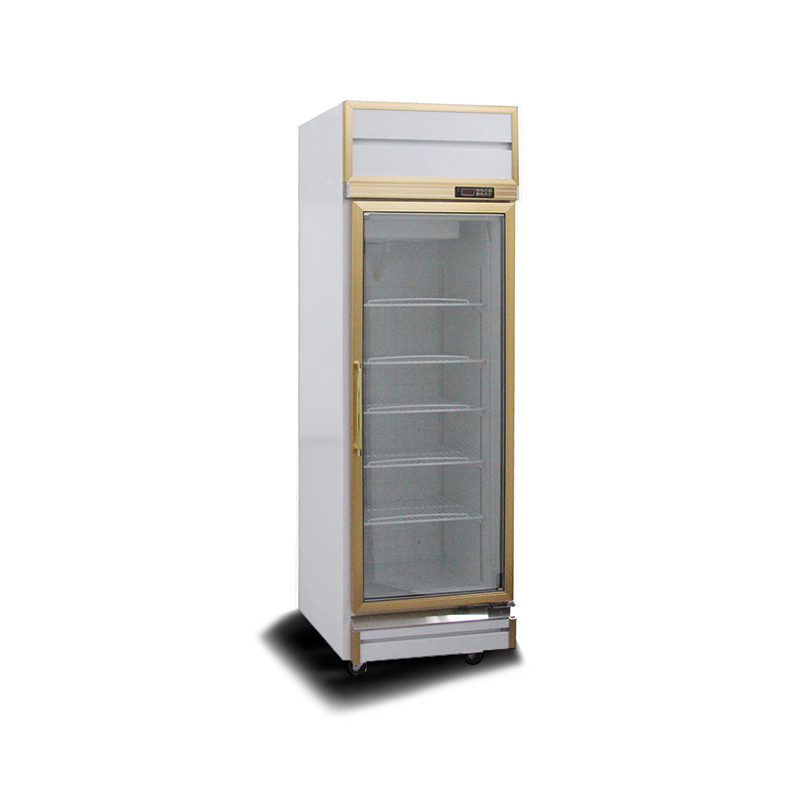 1 door colorbond glass door display chillerModel: RG-640C / RG-640FView Product →
Temperature Control: One Zone or Two?
Red wine and white wine have different ideal serving temperatures, but a single-temperature cabinet is acceptable when you only serve one type or when the inventory turns so fast that the wine never sits long. For a serious wine program, however, a dual-zone cabinet is a better investment. You can store reds at 14 to 16°C and whites at 8 to 10°C in the same unit, assuming the specifications allow two independent zones. Too many operators buy a single-zone cabinet and then try to store both red and white in it at the same time. That leads to tasteless white or a red that never comes to temperature.
Check how the unit controls temperature. Digital displays are easier to read, and electronic thermostats respond more precisely than mechanical ones. In a commercial kitchen, the ambient temperature might exceed 32°C, so verify the cabinet's operating range. A unit that is rated only for 30°C ambient will struggle once the kitchen gets busy.
A two-door glass-door display chiller gives you more cubic space for a mixed inventory, and the wider opening makes it easier to pull bottles during service. When you are deciding between a one-door and a two-door unit, think about the counter space you are willing to dedicate.
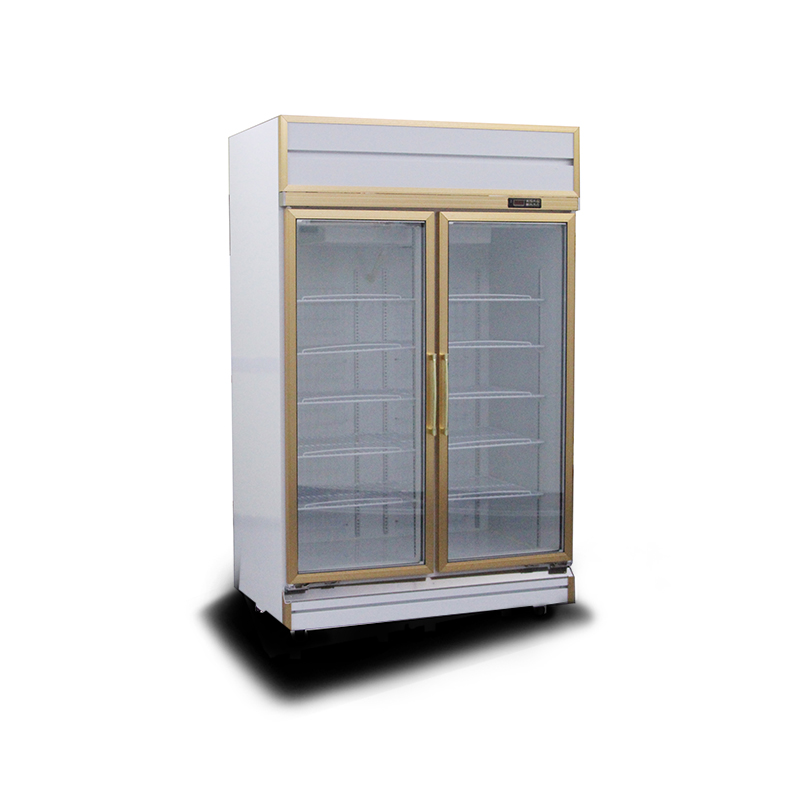 2 door colorbond glass door display chillerModel: RG-1260C / RG-1260FView Product →
Humidity, Vibration, and UV Protection
Wine is sensitive to three things that ordinary refrigerators ignore: humidity, vibration, and ultraviolet light. Damaged cork can let oxygen in, vibration agitates the sediment, and UV light ages the wine prematurely.
- Humidity: aim for around 50 to 70 percent relative humidity. Some commercial chillers include a water reservoir or humidifier tray; others rely on the natural moisture from the evaporator. Check the manufacturer's route for adding water.
- Vibration: look for a compressor that is mounted on rubber dampers or uses a vibration-reducing design. A storage shelf that is almost pure metal can amplify resonance in a busy dining room.
- UV protection: a glass door should be double-paned with UV-filtering glass. Clear single-pane glass leaves your bottles exposed to light damage.
Upright cabinets with a glass door let you show off labels, but the glass is also where UV comes in. An opaque door avoids UV but hides inventory. In a front-of-house location, double-pane UV glass is the better trade-off. These factors are not optional in a serving environment. A bottle that has been mishandled by heat or light tastes different from the same vintage stored correctly.
Installation and Venting in a Commercial Space
Where you put the cabinet matters as much as what you buy. A wine chiller needs proper ventilation because the compressor rejects heat into the room. If the unit is pushed into a tight alcove, it will recycle its own hot air, run longer, and shorten the life of the compressor.
Allow clearance between the cabinet and the wall, and avoid placing it next to an oven, dishwasher, or direct sunlight. You also need to think about the electrical circuit. Commercial refrigerators often require a dedicated outlet; using an extension cord is not recommended. Never rely on a manufacturer's "self-contained" promise without checking the rear grille. Some units vent from the back, others from the bottom. Cutting airflow by even 20 percent can add 15 to 20 percent to the compressor run time.
| Location | Clearance needed | Typical concern |
|---|---|---|
| Back bar | 10 cm on sides, 15 cm behind | Heat from glassware washers |
| Restaurant dining room | 15 cm on sides, 20 cm behind | Foot traffic and door swinging |
| Wine retail shop | 10 cm on sides, 15 cm behind | Display lighting as a heat source |
If your space is limited, read the installation guide for an under-counter wine chiller. It addresses the specific clearances and door-swing requirements that matter in a compact bar setup. Think about the door swing as well. A glass door that swings against a wall or into a passage will frustrate staff and damage the cabinet. On the other hand, a properly installed under-counter wine chiller can fit neatly beneath a counter while still remaining accessible. Consider a wall-mounted unit for a dry bar where floor space is at a premium.
Maintenance and Operating Costs
Cleaning is not complicated, but it must be consistent. Wipe down the glass daily to prevent smudging, vacuum the condenser coils every three months, and check the door gasket for any gaps that let cold air escape. Oil and grease from a busy kitchen can build up on the condenser fins, turning the heat exchanger into an insulator. This is the most common cause of premature compressor failure in restaurant refrigerators. A quarterly vacuum and a monthly wipe of the glass pay for themselves in avoided repair calls.
Energy use is a real operating expense. In a commercial setting, a poorly sealed cabinet can add significantly to your electricity bill. Check the refrigerant type and whether the manufacturer publishes energy consumption data. Also confirm that the compressor is rated for the local voltage and frequency.
For a growing wine program, a three-door glass-door display chiller provides extra capacity when you need to move from a few cases to a more serious stock. You can dedicate one section to reds, one to whites, and one to sparkling or featured bottles.
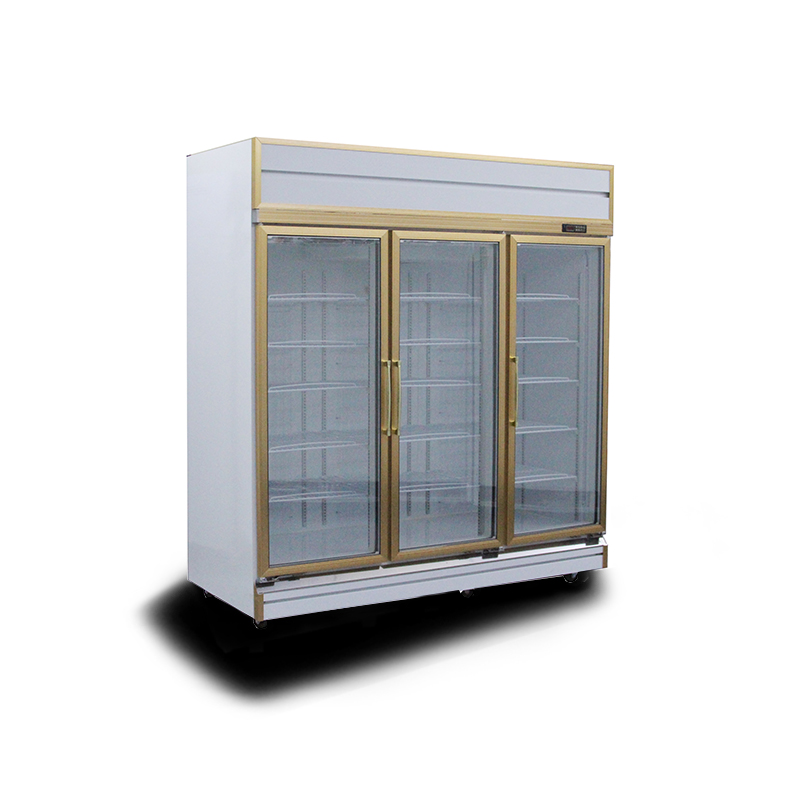 3 door colorbond glass door display chillerModel: RG-1880C / RG-1880FView Product →
Make the decision by working backwards from your peak service day. Count bottles, measure the space, confirm the ambient heat, and then select a commercial cabinet wine chiller with enough temperature stability, airflow, and glass protection. The few extra minutes you spend on specs will save you from replacing a compressor or losing a precious case of wine.