 English
 عربى
 Français
 русский
 Español
 中文简体
Walk into almost any shop that sells something cold, a convenience store, a corner deli, a small supermarket, and you will meet a retail refrigerator within a few steps of the door. Sometimes it is the lit glass door cabinet beside the till, stacked with drinks and ready meals. Sometimes it is the stainless steel workhorse in the back room, quietly holding tomorrow's deliveries at temperature.
Choosing one is not complicated, but it is easy to get wrong in small ways that only show up later: a cabinet that never quite recovers its temperature on a hot afternoon, a display that hides the product behind condensation, a back-of-house unit that turns out to be a hundred millimetres too wide for the gap you had in mind. We have been building commercial refrigeration since 1987, first in Taiwan and since 2008 at our factory in Shengzhou, Zhejiang, so we have seen most of those mistakes at least once, usually in a shop owner's photographs of a fit-out that has just gone wrong.
What follows is roughly what we would tell a shop owner or a procurement manager across a table: what a retail refrigerator is actually for, how the different cabinet types fit different ways of selling, and which details are worth thinking about before you place an order.
What a Retail Refrigerator Actually Has to Do
Retail refrigeration has to do three jobs at the same time, and the balance between them shifts with the shop you run.
- Sell. A display cabinet is furniture as much as it is equipment. If a customer cannot identify what is inside from two or three metres away, the cabinet is not doing its first job, no matter how well it cools.
- Hold temperature. Doors on a sales floor open dozens or hundreds of times a day. The number that matters is not the temperature on the label but the temperature the cabinet keeps when it is full, the shop is warm, and staff are in and out constantly.
- Survive the environment. Back rooms are crowded, kitchens are greasy, coastal air is salty, and summer afternoons in many markets push ambient temperatures well past thirty-five degrees. A retail refrigerator earns its keep over years, not weeks.
Getting one of these three right while neglecting the others is where most disappointment comes from. A unit that cools beautifully but is awkward to see into will be quietly ignored by shoppers. A cabinet that looks wonderful on the first day but runs its compressor without rest will cost you in electricity and repairs long before it is paid off.
Matching the Cabinet to the Way Your Store Sells
Start with the format of the shop rather than with model numbers. The same volume of stock can be presented in very different ways, and the selling method usually decides the cabinet type before anything else does.
| Store format | What customers expect | Cabinet type that usually fits |
|---|---|---|
| Convenience store | Grab-and-go drinks and snacks | One or two door glass display chiller |
| Supermarket or grocery | Self-service chilled and frozen aisles | Multi-door glass display chiller or freezer |
| Deli, butcher or bakery | Products visible, served by staff | Glass door counter chiller |
| Cafe, milk tea shop or bar | Fast access at the counter | Under-counter chiller or beer bar cabinet |
| Restaurant kitchen | Bulk storage and preparation space | Upright stainless steel cabinet with counter refrigerator |
| Central kitchen | Rapid freezing and standard portions | Blast freezer and GN pan cabinet |
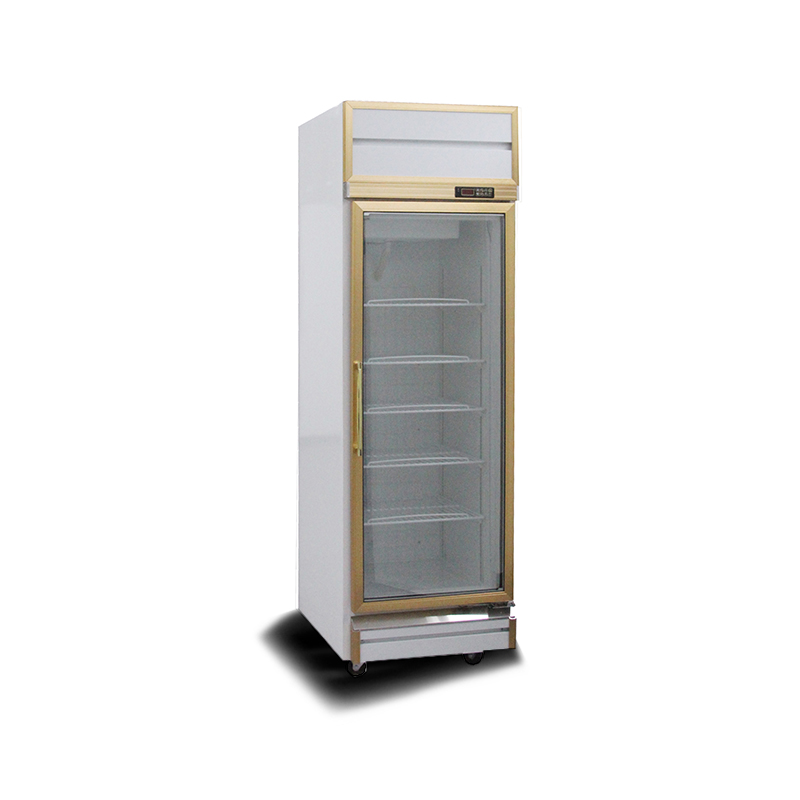 Single Door Colorbond Glass Display ChillerA 500-litre glass-door display chiller with heated glass, auto-close door and +2~+12°C or -18°C options, suited to display-led shop planning.View Product →
If you are unsure which row you belong to, the answer usually starts with two measurements: how many items you need on display at one time, and how much floor space you are willing to give up for it.
Glass Door Display Cabinets: The Details Shoppers Never Notice
Display cabinets are the most visible part of retail refrigeration and the easiest to judge badly, because the problems are invisible on the showroom floor.
Airflow and temperature recovery
A well-designed cabinet draws a curtain of cold air down the inside of the glass. When the door closes after a busy minute, that curtain should rebuild quickly and bring the cabinet back to its set temperature. Ask how long recovery takes with a full load on a warm day. A serious supplier will have a measured answer rather than a reassuring one.
Condensation, lighting and door behaviour
Nothing discourages a purchase faster than glass that keeps fogging over. Heated glass doors, sensible defrost cycles and reasonable door gaskets all work together here, and the same thinking applies to interior lighting: bright, even light shows colour and texture honestly, while harsh or patchy light makes fresh food look tired. Automatic door closing is a small feature with a large effect, because it stops the door being left ajar during the lunchtime rush.
Chiller or freezer, colour steel or stainless steel
Chillers typically hold a chilled range suitable for drinks, dairy and prepared food, while freezers run considerably colder and need different defrost logic. Many of our cabinets share the same outer dimensions across both temperature classes, so you can plan a run of units that looks consistent while each one does a different job. The shell matters too: colour steel suits a bright front-of-house design, while stainless steel is the safer choice where grease, moisture and frequent washing are part of daily life.
Back-of-House Storage, Preparation and Freezing
Behind the swinging door, priorities change. Capacity, hygiene and how quickly staff can get in and out matter more than kerb appeal.
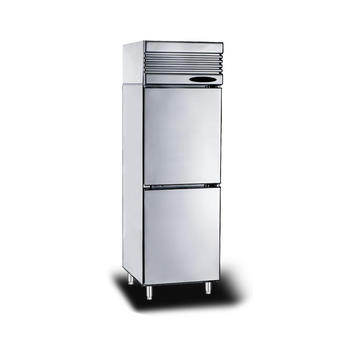
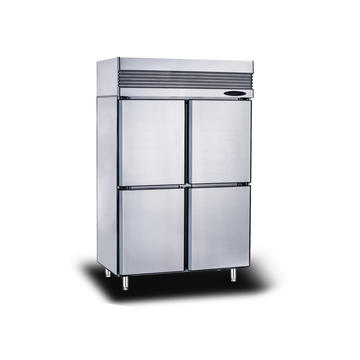
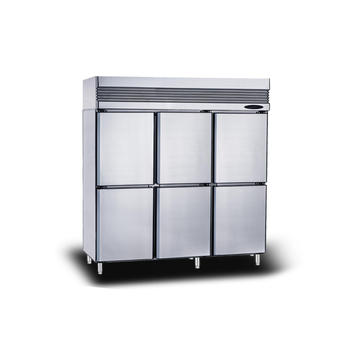
- Upright stainless steel cabinets. Half-door and full-door configurations in two, four and six door layouts cover most kitchen storage needs, and the half-door versions let staff open only the section they need.
- Counter refrigerators. Built in widths such as 1200mm, 1500mm and 1800mm, these double as a work surface, which is often the single most useful square metre in a small kitchen. Drawer versions keep knives, utensils or garnishes separated and within reach.
- Blast freezers. Where food is prepared in batches, rapid freezing protects texture and gives you control over shelf life that a standard freezer cannot.
- Task-specific cabinets. Salad counters, beer bar units, GN pan cabinets and wall-mounted refrigerators exist because some kitchens simply do not have the floor space for anything else.
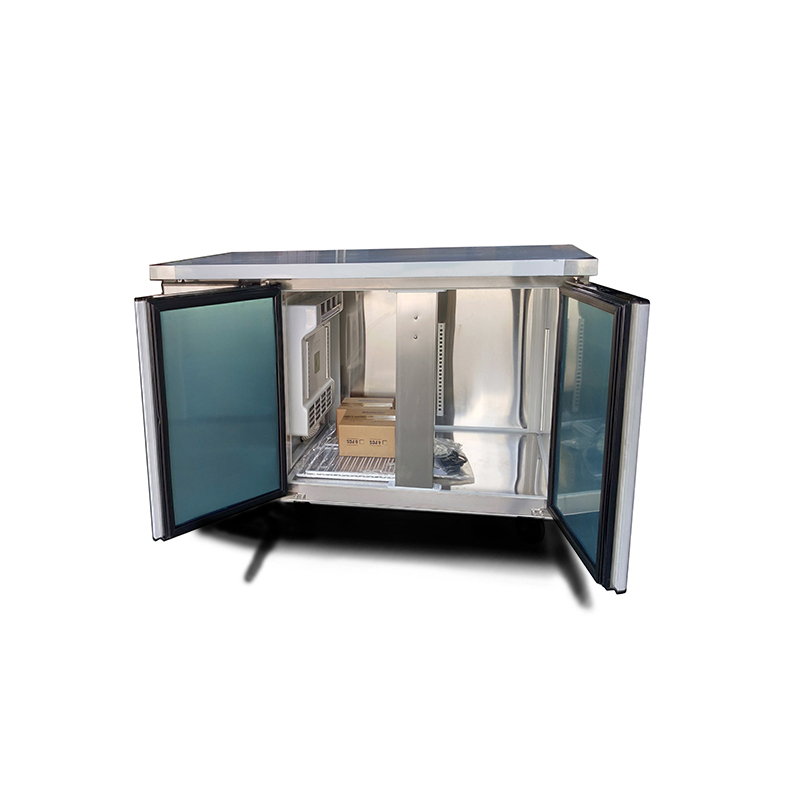 EK Series Two Door Stainless Steel Counter RefrigeratorA 260-litre two-door counter refrigerator with +2~+12°C or -18°C operation, 201 stainless steel construction and a joint-in cooling unit for back-of-house kitchens.View Product →
It is worth measuring the route into the kitchen as well as the space the cabinet will occupy. A cabinet that fits the alcove but not the doorway is a problem nobody enjoys solving on delivery day.
Sizing, Energy and a Practical Checklist
Before you settle on a model, walk through these points in order. They take ten minutes and save considerably more than that.
- Decide display or storage first, then match the temperature class to the products you actually sell.
- Measure the alcove, the doorway and the turning space, and leave room for ventilation at the rear.
- Estimate daily door openings, since this drives how much cooling capacity you need.
- Check the summer ambient temperature of the room, not the winter one.
- Confirm that shelf spacing and interior height suit your packaging, not just your product.
- Check how the condenser coil, drain and filters can be reached for routine cleaning.
- Ask what spares and technical support will be available in three or five years.
Energy use deserves a place on that list because it accumulates quietly. Door gaskets, insulation quality, defrost strategy and compressor matching all influence running costs, and the differences between two similar-looking cabinets can be significant over a year of trading. If you want to go deeper on this, our notes on energy efficiency for RL/RS series upright refrigerators in retail environments cover the design factors in more detail.
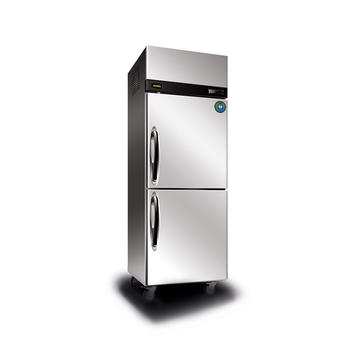
 RL/RS Series Upright Two Half Door RefrigeratorA two half-door upright refrigerator with adjustable shelves, stable cooling control and durable construction for restaurants, hotels, cafes, convenience stores and supermarkets.View Product →
Shops that operate more than one site often standardise on a small number of models for exactly this reason: fewer spare parts, simpler training, and a fit-out that looks deliberate rather than assembled.
Working With the People Who Build the Cabinet
One practical advantage of buying from a manufacturer rather than a reseller is that the person answering your question about airflow is often the person who designed the airflow. We build both the cabinets and the heat exchangers inside them, including air-cooled evaporators and air-cooled condensers, which means replacement parts and technical answers come from the same place the equipment did.
It also means we can talk about specific configurations without guesswork, whether that is a colour steel display chiller for a small shop or a run of stainless steel counters for a chain rollout. Our team works in several languages and ships from a factory about an hour from Ningbo port, so enquiries from importers and distributors are a normal part of the working day rather than a special case.
If you would like the technical detail first, you can download our product catalogue and compare dimensions, temperature ranges and door configurations before any conversation starts.
A retail refrigerator is one of those purchases that stays with you for years, so it is worth spending an extra afternoon on the decision. Think about what you sell, how often the door will open, and what the room will feel like in August. If you tell us those three things, we can usually narrow the choice down quickly, and you can spend your energy on the part of the business that actually faces the customer.