 English
 عربى
عربى Français
 русский
 Español
 中文简体
中文简体Open the specification sheet for a new stainless steel counter refrigerator, and the electrical line will read something like "115V / 60Hz / NEMA 5-15P." If you are not an electrician, that code raises a fair question: can this unit plug into the outlet your kitchen already has, or do you need to budget for rewiring? The short answer is usually reassuring. A NEMA 5-15P is the standard North American 120-volt, 15-amp grounded plug — the same configuration used by most household appliances, computers, and power tools. For typical self-contained commercial refrigeration, it means a straightforward cord-and-plug connection to a standard wall outlet.
That does not mean the subject deserves no attention. The designation determines whether the unit matches your existing receptacles, whether the branch circuit can handle the running and starting current, and what you should confirm with the manufacturer before the equipment ships. This article explains what 5-15P actually means, which commercial refrigeration products use it, and the installation points buyers commonly overlook.
What the 5-15P designation actually means
The NEMA plug-and-receptacle system is a set of North American standards published by the National Electrical Manufacturers Association. Read the code from left to right and it gives you the full electrical identity of the connector. The first digit, 5, places it in the 125-volt class, which corresponds to the 120-volt nominal supply used in the United States and Canada. The 15 is the current rating in amperes. The final letter tells you which end of the connection you are looking at: P stands for plug, the male end with exposed blades, while R stands for receptacle, the wall outlet.
Physically, a 5-15P is the familiar two-pole, three-wire grounded plug found on laptops, monitors, and small kitchen equipment: two flat parallel blades for the hot and neutral conductors, plus a U-shaped grounding pin. It is rated for 125 volts and 15 amperes, and it mates with the standard 5-15R outlet. When a spec sheet lists NEMA 5-15P, it is telling you that the equipment ships with a cord terminating in this standard plug. It is not a request for an unusual industrial connection, and it does not require a special installer.
Where 5-15P plugs appear on commercial refrigeration equipment
Not every commercial refrigerator plugs into a 5-15P. Large reach-in freezers, walk-in systems, and heavy blast freezers often draw too much current for a 15-amp circuit and are hardwired or fitted with higher-amp configurations. The majority of compact, self-contained units in a foodservice operation, however, fall comfortably within the 15-amp limit. The product range is wider than many buyers realize:
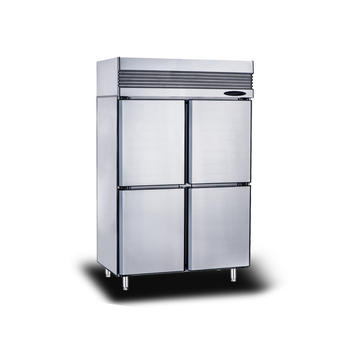
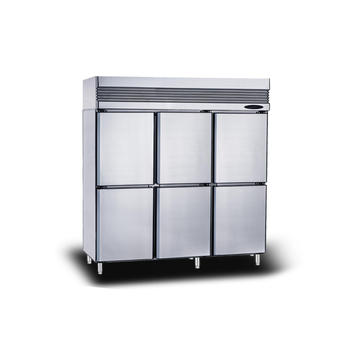
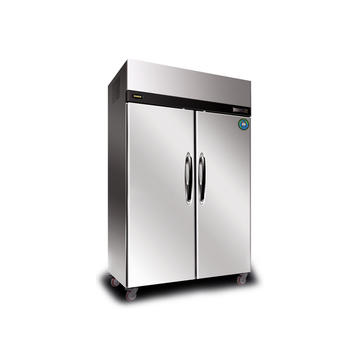
- Stainless steel counter refrigerators in 1200 mm, 1500 mm, and 1800 mm widths used for prep ingredients and overnight storage.
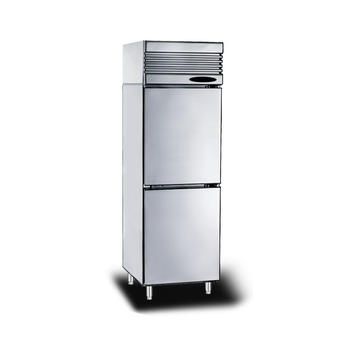
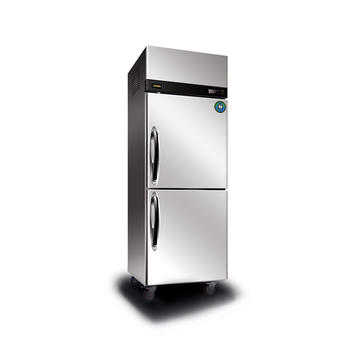
- Upright half-door chillers and freezers for back-of-house storage of meat, dairy, and ready-made items.
- Glass-door display chillers for bottles, yogurt, and packaged food in retail and self-service settings.
- Salad counters, GN-pan chillers, beer bars, and wall-mounted refrigerators for kitchens where floor space is tight.
A two-door stainless steel counter refrigerator in the 1200 mm width is a typical 5-15P-fed machine. Its compressor draws roughly 3 to 6 amps in normal running, so the factory cord and plug are designed for a standard grounded outlet. The table below summarizes where 5-15P commonly appears and the circuit recommendation that goes with each equipment family.
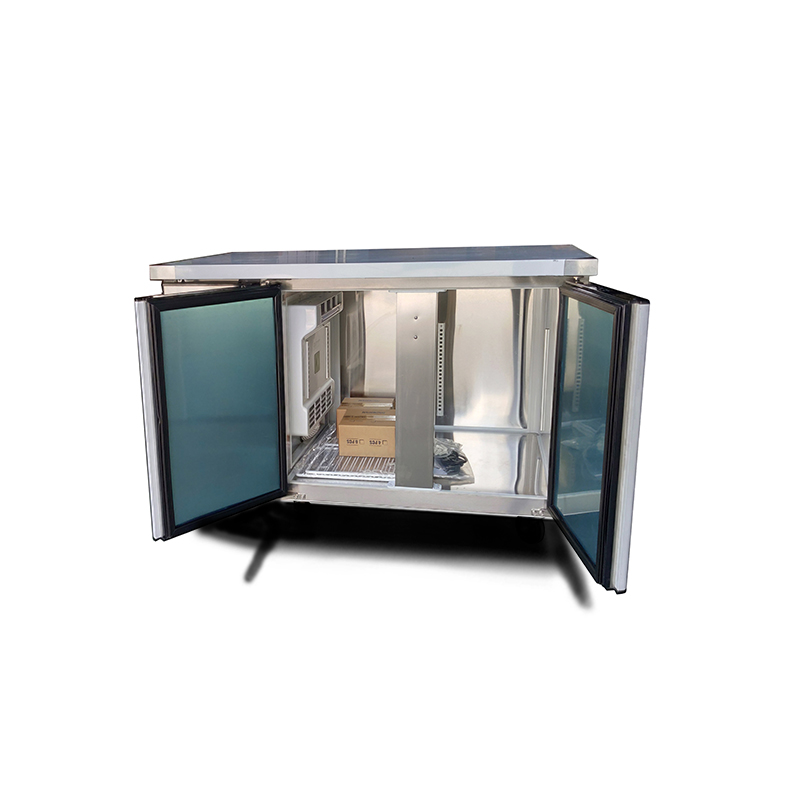 Two-Door Stainless Steel Counter Refrigerator 1200mmThis 1200mm-wide counter refrigerator matches the typical 5-15P application described above, drawing 3-6 amps on a standard circuit. Its joint-in cooling unit suits high ambient humidity and easy maintenance.View Product →
| Equipment category | Typical plug | Typical running current | Recommended branch circuit |
|---|---|---|---|
| Stainless steel counter refrigerator (1200–1800 mm) | NEMA 5-15P | 3–6 A | 15 A dedicated |
| Upright half-door chiller / freezer | NEMA 5-15P | 4–8 A | 15 A dedicated |
| Glass-door display chiller | NEMA 5-15P | 4–8 A | 15 A dedicated |
| Salad counter / GN-pan chiller | NEMA 5-15P | 3–7 A | 15 A dedicated |
| Two-door blast freezer | Hardwired or 20 A | 8–15 A | Per nameplate rating |
The lesson is the same in every row: confirm the nameplate amperage. The plug rating tells you the maximum capacity of the connector, not the actual draw of your specific model. A unit with a 5-15P plug still needs a circuit properly sized for its running load and starting surge.
Circuit sizing: the 80% rule and the starting surge
Electrical codes treat refrigeration appliances as continuous loads, and the standard rule of thumb is that a branch circuit should not be loaded beyond 80 percent of its rating. On a 15-amp branch circuit, the continuous budget is 12 amps. Most small commercial compressors run well below that figure in normal operation. The number that matters more is the starting surge, listed on the nameplate as locked rotor amperage (LRA). A compressor can briefly draw two to four times its running amperage on startup, and if other equipment shares the same circuit, the combined surge can trip the breaker or make the lights flicker.
That is why a dedicated circuit is the standard recommendation for refrigerators and freezers in commercial kitchens. It isolates the compressor from coffee machines, ice makers, and dishwashers, and it gives the unit the margin it needs on hot days when the condenser is working hardest. Voltage tolerance is the second point worth understanding. A motor rated for 120 volts is designed to operate acceptably between roughly 103.5 and 126 volts in North America. Prolonged undervoltage, common on overloaded circuits in older buildings, forces the compressor to work harder, raises the running current, and shortens the service life.
What to look for when you buy
When comparing units, ask for the full electrical specification rather than the plug type alone. NEMA 5-15P tells you the connector will fit a standard outlet; it does not tell you the voltage tolerance, frequency, cord length, or whether the unit is factory-configured for 60 Hz. Export buyers in particular should confirm that the cord and plug are terminated for their destination market. Redbowl, for example, has manufactured commercial refrigeration equipment since 1987 and supplies export markets with region-specific configurations.
Upright machines add a consideration that is easy to miss: the outlet location. A full-height upright chiller needs to sit close enough to a grounded receptacle that the cord reaches without stretching, and the space behind the unit must permit airflow to the condenser. Measuring the distance from the intended position to the outlet takes five minutes and prevents a service call later.
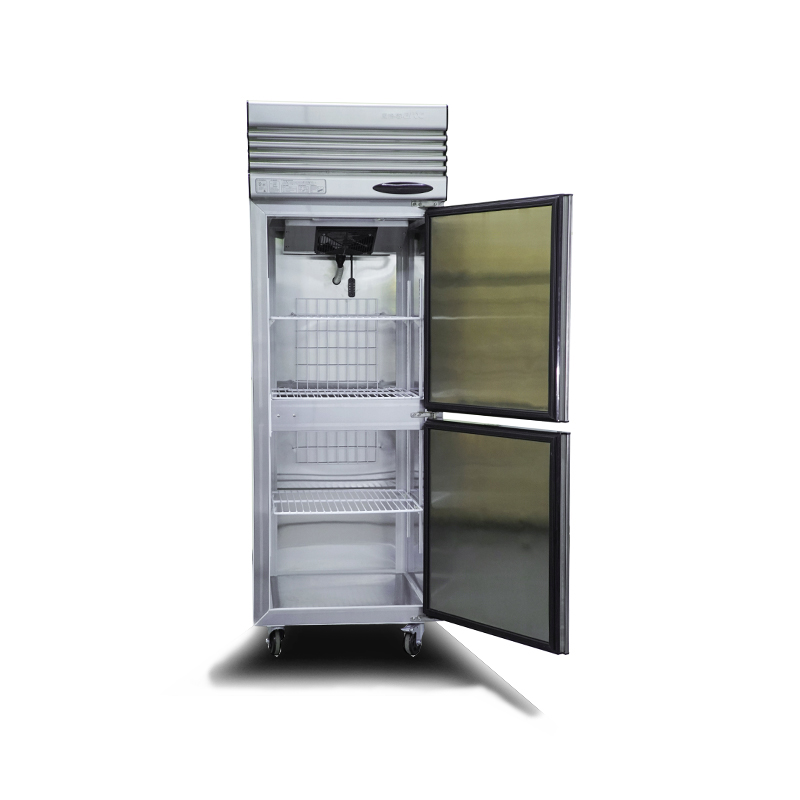 Two-Door Stainless Steel Upright Half-Door ChillerPositioned where outlet distance matters, this upright chiller needs adequate cord reach and condenser airflow. Its compact 680x740x1935mm footprint and joint-in cooling unit suit tight retail or kitchen spaces.View Product →
Retail operators planning a display run should check the glass-door chiller's door-swing radius, interior lighting, and shelf adjustability as well as the electrical side. A display unit with a 5-15P plug will run on a standard circuit, but the merchandising details determine whether it actually sells the product.
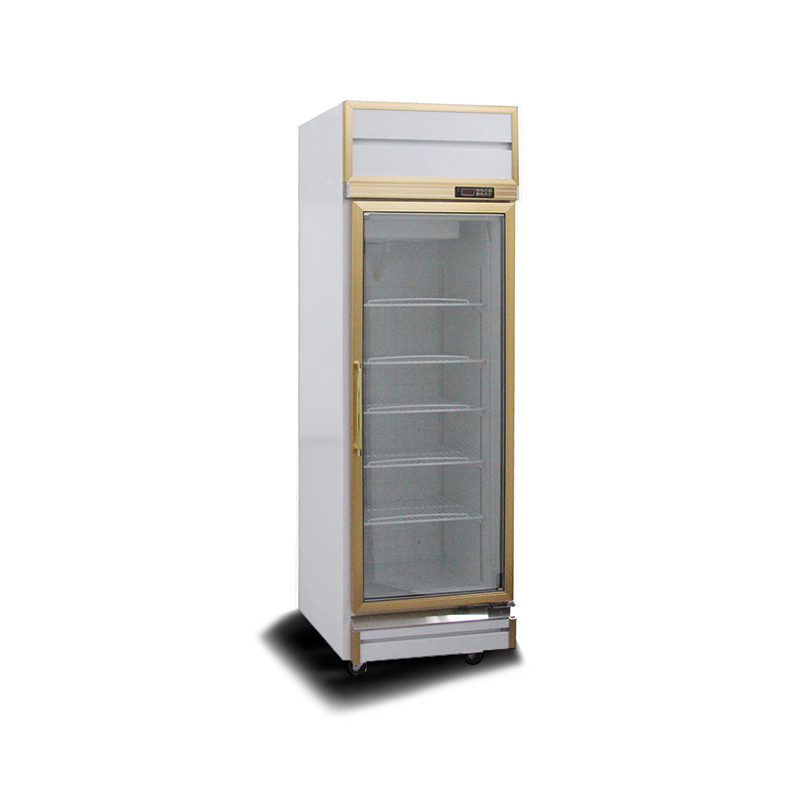 One-Door Colorbond Glass Door Display ChillerConsider this glass-door display chiller for merchandising impact, with color options in silver or gold. It fits a standard 5-15P circuit and offers adjustable shelves and interior lighting for retail settings.View Product →
For a fuller selection checklist, read what to look for in an upright refrigerator and compare stainless-steel equipment options against your kitchen layout. Those articles cover the storage and workflow points that the electrical spec never mentions.
Bottom line
A NEMA 5-15P is not an exotic industrial connector. It is the standard 120-volt, 15-amp grounded plug that ships with most compact commercial refrigerators, from stainless steel counter units to glass-door display chillers. The decision it forces is simple: confirm the nameplate running and starting amperage, put the unit on a properly rated branch circuit, and verify the plug configuration before the equipment ships. Do that, and the 5-15P becomes one less detail in a project that already has enough of them.